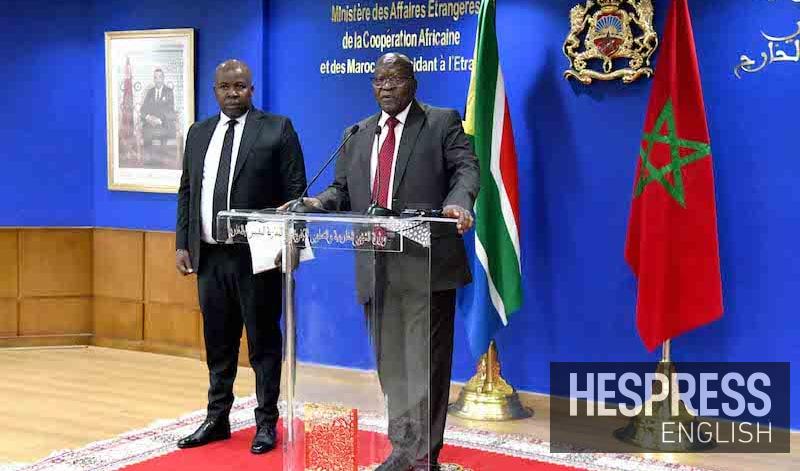
Former South African President Jacob Zuma’s recent visit to Morocco has ignited political and diplomatic tensions in Pretoria after Zuma publicly voiced support for Morocco’s sovereignty over the Sahara territory.
Zuma, who currently leads South Africa’s MK Party, expressed his backing for Morocco’s autonomy plan for the region, a proposal put forward by the Moroccan government as a solution to the long-standing territorial dispute. His comments, delivered during an official visit to Rabat, were widely covered and interpreted as a break from South Africa’s traditionally pro-Polisario stance.
In response, South Africa’s Department of International Relations and Cooperation (DIRCO) issued a brief and unusually sharp statement, describing the use of the national flag during Zuma’s visit as a “protocol error.” The ministry’s reaction, seen by observers as a superficial deflection, has been criticized for highlighting internal inconsistencies within South Africa’s position on the Moroccan Sahara issue.
Zuma’s endorsement of Morocco’s autonomy plan has revealed deep divisions within South Africa’s political establishment. Analysts say the episode illustrates that the current government does not hold a monopoly on official opinion in Pretoria, and that independent voices like Zuma’s are gaining prominence.
Despite Pretoria’s reaction, Moroccan authorities emphasized that Zuma’s visit was fully coordinated with both countries’ diplomatic missions. The South African Embassy in Rabat officially requested that Zuma be granted protocol-level reception during the visit, a detail that makes the government’s criticism of flag usage appear inconsistent.
Following the South African foreign ministry’s statement, Zuma’s MK Party announced plans to hold a press conference to formally respond to the government’s position. The party’s reaction is seen as a reaffirmation of Zuma’s credibility and an indicator of growing dissent within the South African political landscape.
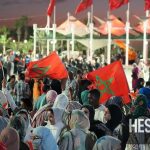
In Morocco, officials dismissed the controversy over flag protocol as a diversion from the core political issue. The use of the South African flag during Zuma’s visit, they said, was a gesture of respect rather than a claim of presidential authority. They also pointed to precedent, instances where South Africa’s national symbols were used by non-state actors in pro-Polisario events without triggering any governmental backlash.
Moroccan analysts see the episode as part of a broader effort by Pretoria to avoid engaging directly with the substance of the Moroccan Sahara debate, a stance they say is increasingly out of step with emerging voices in South African civil and political society.
The Moroccan government has reiterated its commitment to open and respectful dialogue with all actors in South Africa, regardless of ideological affiliation. Zuma’s visit, they argue, demonstrates the potential for constructive diplomacy and mutual understanding, especially given Morocco’s ongoing efforts to build ties across the African continent, including past exchanges with the African National Congress (ANC).
Rephrase in a different way as if you were a native American speaker as a content creation expert and do not talk about yourself or your experience in the text and do not show yourself as an artificial intelligence who wrote and fill the bullet point in the topic and speak the heart of the topic itself and dont take date of blog in ther first and dont take text like box of newsliter subscribe on post from contentand romove all linke insert in content and and remove all affiliate disclosure phrases on content like this “This post may contain Amazon or other affiliate links that allow us to earn a small commission at no extra cost to you. Please see our Disclosure Policy for more info” and “#” put in its place bullet point, and romove name of the web site or his links we are take a content from our new creation, and don’t publish clone new content more than just one time