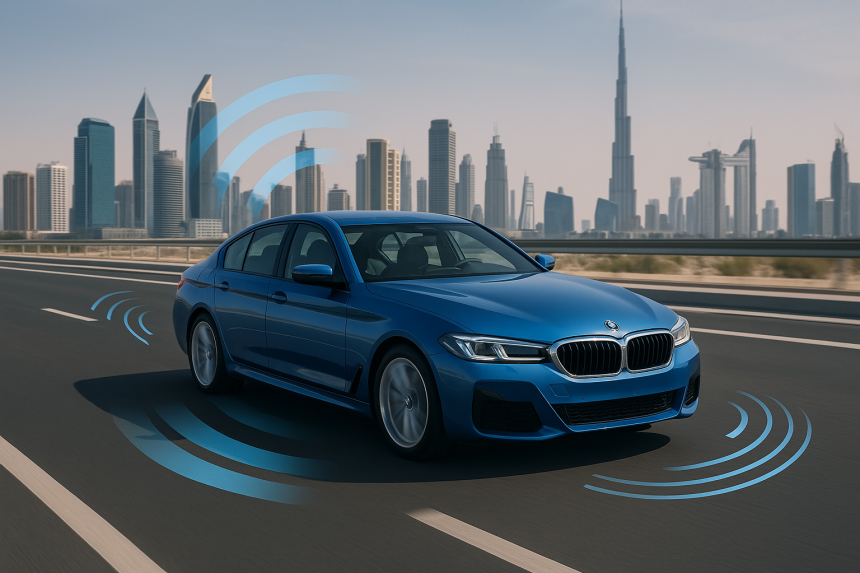
Modern vehicles are equipped with an impressive range of car safety features that work continuously to protect drivers and passengers long before a collision becomes a threat. Unlike older models that relied mainly on passive safety measures such as airbags and seatbelts, today’s vehicles use intelligent sensors and computer-assisted systems to monitor the environment, evaluate risk, and intervene when necessary. These modern features are the result of decades of technological innovation, real-world testing, and cross-industry research involving aviation, motorsports, robotics, and even space exploration.
By understanding both the history and function of these, drivers gain a deeper appreciation for the hidden engineering that quietly enhances every journey.
Anti-Lock Braking System (ABS)
Among the earliest and most transformative car safety features is the Anti-Lock Braking System. ABS prevents wheels from locking during heavy braking, ensuring that the driver maintains steering control rather than skidding uncontrollably. Before ABS, sudden braking, especially on rain-soaked or icy roads, often caused vehicles to slide in a straight line, eliminating the ability to swerve around hazards. ABS improves traction by rapidly pulsing brake pressure, a function far quicker than any human foot could manage.
The origins of ABS reveal the fascinating evolution of car safety features. The system was not born in the automotive world but in aviation. Early aircraft frequently skidded upon landing on wet runways, prompting engineers in the 1920s to design primitive anti-skid systems. Only in the 1950s did the concept migrate into cars, but initial designs were mechanical, oversized, and unreliable. The major breakthrough came in the 1970s, when Bosch introduced the first digital ABS using microprocessors. This shift marked a turning point in the development of modern car safety features, paving the way for traction control and stability systems.
Traction Control System (TCS)
Traction Control is another essential advancement in car safety features, designed to manage wheel spin during acceleration. When sensors detect that a wheel is slipping, common in wet, icy, or loose-gravel conditions, the system reduces engine output or applies targeted braking to restore grip. This helps drivers maintain control when pulling into traffic, climbing steep hills, or navigating unpredictable surfaces.
The historical roots of TCS further highlight how diverse industries have shaped today’s car safety features. Traction control began in Formula 1 racing, where engineers sought ways to allow cars to accelerate aggressively without sacrificing control. Electronic traction management was so effective that it created an unfair competitive advantage, prompting F1 officials to ban it. Automakers, however, recognized the life-saving potential of the technology and adapted it for road use. When combined with ABS and ESC, traction control plays a key role in creating a cohesive suite of car safety features focused on stability and accident prevention.
Electronic Stability Control (ESC)
ESC stands as one of the most significant car safety features ever introduced. It compares the driver’s steering intent to the vehicle’s actual motion, applying precise braking to individual wheels or adjusting engine power when understeer or oversteer is detected. ESC helps prevent skidding, spinout, and rollover risks that increase during sudden maneuvers or on slippery road surfaces.
ESC’s development was driven by accident data from the 1990s, when a number of SUVs failed stability tests and experienced high rollover rates. Automakers, particularly Mercedes-Benz in partnership with Bosch, accelerated the creation of ESC. A defining moment occurred during the Swedish “elk test,” in which vehicles were required to swerve rapidly to avoid a simulated animal. Cars lacking ESC performed poorly, while those equipped with this advanced addition to car safety features passed with remarkable control. This demonstration helped push ESC into global safety regulations, making it a mandatory technology in many countries.
Lane Assist and Lane Keeping Systems
Lane Assist systems use cameras to track road markings and alert drivers if the vehicle drifts unintentionally. More advanced Lane Keeping Systems gently steer the car back onto the correct path. As one of the more modern car safety features, lane assistance greatly reduces crashes caused by distraction, fatigue, or momentary lapses in attention.
The origins of this technology lie in robotic vision research. Early robotic systems were designed to detect lines and boundaries, laying the groundwork for the algorithms that now guide vehicles at motorway speeds. Mitsubishi introduced an early automotive Lane Assist system in 1992, though it was limited to clear weather and well-maintained roads. With advances in image recognition and AI, lane detection has become one of the most dependable car safety features, enabling semi-autonomous driving functions such as highway autopilot.
Forward Collision Warning (FCW)
Forward Collision Warning systems continuously assess the distance between vehicles to detect when a collision is likely. Using sensors, radar, or cameras, FCW alerts the driver with visual or audible warnings, giving them time to brake or steer out of danger. This technology has become one of the most important predictive car safety features, particularly in heavy traffic environments.
Its origins can be traced to NASA, where early proximity-detection research helped aircraft avoid mid-air collisions. Automotive engineers adapted the same principles to road conditions, resulting in early FCW systems that first appeared in luxury vehicles. As the underlying components became cheaper and more efficient, FCW became a mainstream part of advanced car safety features.
Automatic Emergency Braking (AEB)
AEB builds upon FCW by taking action when the driver fails to react in time. Modern AEB systems analyze radar and camera data, identify obstacles, and autonomously apply the brakes to reduce or prevent a collision. Even when impact is unavoidable, AEB dramatically reduces speed, lowering injury risk.
In the 1990s, early automatic braking systems were prone to false alerts and inaccuracies. The transformative moment came when engineers combined radar with forward-facing camera data, creating a reliable dual-sensor approach. AEB has since become one of the most crucial car safety features, and many automakers voluntarily adopted it well before regulations mandated it.
Blind Spot Monitoring (BSM)
Blind Spot Monitoring uses radar sensors to detect vehicles that sit outside mirror visibility. When a car enters the driver’s blind spot, BSM illuminates a warning symbol or provides an audible alert to prevent unsafe lane changes. This is one of the most confidence-boosting car safety features, especially for drivers navigating multi-lane roads or congested motorways.
The technology has an interesting origin story. Engineer George Platzer conducted extensive research on mirror angles and visual perception, discovering that electronic assistance was the only reliable way to eliminate blind-spot risks. His foundational work led to the modern BSM systems now integrated into most vehicles.
Adaptive Cruise Control (ACC)
Adaptive Cruise Control automatically adjusts a vehicle’s speed to maintain a safe distance from traffic ahead. Unlike traditional cruise control, ACC can slow, accelerate, and even manage stop-and-go traffic in advanced versions. This makes it one of the most convenience-enhancing yet safety-oriented car safety features in modern driving.
ACC emerged from military radar technology that was later miniaturized for consumer vehicles. Mitsubishi introduced an early laser-based system in the 1990s, but radar-guided ACC eventually became the industry standard. As one of the foundational car safety features leading toward autonomous driving, ACC significantly reduces fatigue and helps prevent tailgating-related accidents.
Rearview Cameras and Parking Sensors
Rearview cameras and parking sensors assist drivers during reversing and parking maneuvers. These car safety features provide expanded visibility and proximity warnings, greatly reducing back-over accidents and low-speed collisions.
Although these features became common only in the 21st century, their origins date back to the 1956 Buick Centurion concept car, which showcased an early rear-mounted camera. Motorsport engineers later refined similar systems to improve aerodynamics by eliminating mirrors. Today, this technology forms an essential part of driver awareness in urban environments.
You can also read our blog on safety measures to prevent car fire accidents for additional guidance on protective measures drivers should take.
Conclusion
The evolution of modern car safety features highlights how engineering innovations have fundamentally transformed vehicle design and driver protection. From early mechanical anti-skid devices to today’s multi-sensor autonomous systems, each advancement has contributed to preventing accidents before they occur.
While attentive driving remains essential, the intelligent network of these features, including ABS, traction control, ESC, lane assist, FCW, AEB, BSM, ACC, and reversing technologies, acts as a silent guardian on every journey. As automotive technology continues advancing, these features will grow even more sophisticated, bringing us closer to a future where vehicles serve as proactive partners in safety rather than passive machines.
Rephrase in a different way as if you were a native American speaker as a content creation expert and do not talk about yourself or your experience in the text and do not show yourself as an artificial intelligence who wrote and fill the bullet point in the topic and speak the heart of the topic itself and dont take date of blog in ther first and dont take text like box of newsliter subscribe on post from content and romove all linke insert in content and and remove all affiliate disclosure phrases on content like this “This post may contain Amazon or other affiliate links that allow us to earn a small commission at no extra cost to you. Please see our Disclosure Policy for more info and replace”#” put in its place bullet point, and romove name of the web site or his links we are take a content from our new creation,f content talking about another country for car rental Rephrase content to talk about car rental in morocco, and don’t publish clone new content more than just one time