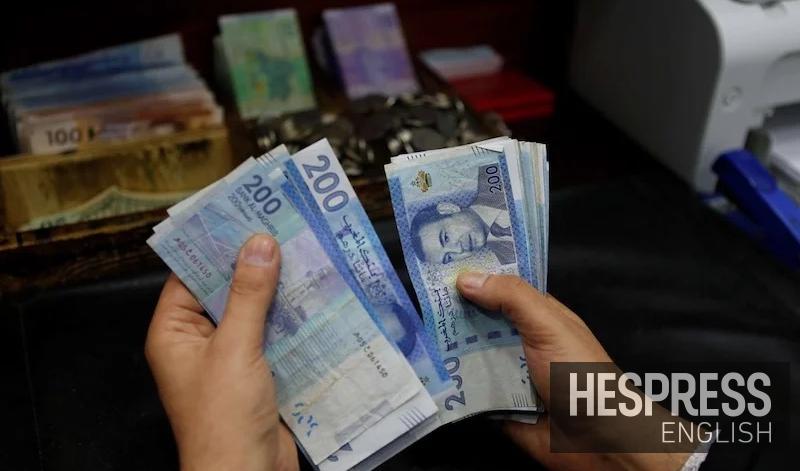
The annual growth of bank loans to the non-financial sector in Morocco reached 3.3% in January, up from 2.6% in December, driven by businesses’ investment needs and households’ financial constraints, economic analysts say.
According to the latest monetary statistics from Bank Al-Maghrib, lending to private companies and households has increased, with household debt rising by 2% compared to 1.7% the previous month. Loans to private non-financial firms also grew by 1.2%, doubling from the previous 0.6%.
Business Investments and Household Spending
Economic analyst Rachid Sari, president of the African Center for Strategic Studies and Digitalization, linked the rise in loans to the start of a new fiscal year. “Companies allocate budgets for new investments at the beginning of the year, and some new businesses are established during this period,” he explained. However, he cautioned that it is too early to determine whether the trend signals sustained economic improvement.
Regarding household borrowing, Sari noted that many families take out loans for annual purchases and property upgrades. He dismissed the idea that rising loan figures directly reflect inflationary pressures, instead attributing them to a cultural pattern of periodic financial planning. He also pointed to an increase in mortgage loans, which he linked to new government policies supporting homeownership.
Financial Struggles and Increased Borrowing
Economist Omar Kettani offered a contrasting perspective, arguing that household borrowing is a response to financial hardship. “Families are struggling due to the ongoing economic crisis,” he said, adding that last year’s financial strain—exacerbated by high living costs, expensive Eid sacrifices, and back-to-school expenses—made increased borrowing inevitable.
Kettani also highlighted Morocco’s liquidity challenges, noting that a significant portion of the country’s money supply remains outside the banking system. He pointed out that many small and medium-sized enterprises (SMEs) are facing financial difficulties, operating on minimal capital without surplus revenue for reinvestment.
Inflationary Risks of Rising Debt
Both analysts acknowledged that Morocco’s growing reliance on credit—by the state, households, and businesses—could fuel future inflationary pressures. While borrowing helps individuals and companies navigate financial challenges, Kettani warned that the trend could trigger medium-term inflation waves, adding another layer of complexity to Morocco’s economic landscape.
Rephrase in a different way as if you were a native American speaker as a content creation expert and do not talk about yourself or your experience in the text and do not show yourself as an artificial intelligence who wrote and fill the bullet point in the topic and speak the heart of the topic itself and dont take date of blog in ther first and dont take text like box of newsliter subscribe on post from content and romove all linke insert in content and and remove all affiliate disclosure phrases on content like this “This post may contain Amazon or other affiliate links that allow us to earn a small commission at no extra cost to you. Please see our Disclosure Policy for more info” and “#” put in its place bullet point, and romove name of the web site or his links we are take a content from our new creation