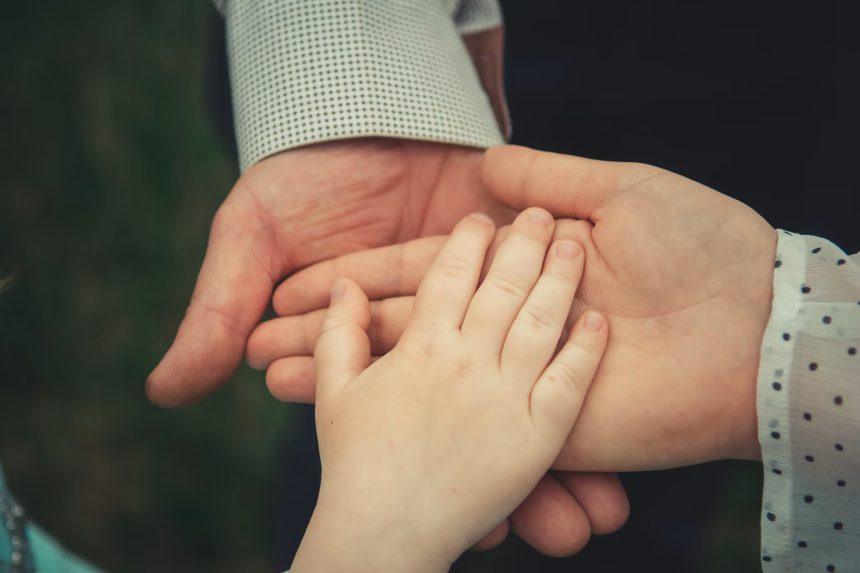
“As long as we are healthy and together.” These simple words echo across homes, memories, and even borders.
Family, for many, begins in crowded hallways, full houses with lines at the bathroom door, cereal bowls competing for the last drop of milk, slippers flying from mothers demanding clean rooms, and children hiding behind grandmothers for safety and affection. In these spaces, we are shaped.
And then we leave. Drawn by the pull of independence, careers, new cities, new lives. At first, it’s exhilarating. Then, the echoes return: a parent’s laughter, the scent of a home, cooked meal, the feeling of belonging.
Time turns, and so do the roles. The once-rebellious child now holds the shower handle for an aging parent, gently guiding them through routines once familiar. Priorities shift, fear creeps in quietly, and we begin to understand: aging also means goodbye.
In Doha, Muneera Alkuwari, a Qatari woman, has lived this journey. From a young age, she helped her blind father navigate the world, leading him by the hand to the mosque for prayer.
“I was just a little girl,” she says, remembering vividly the rhythm of responsibility etched into her childhood. When he grew older and sick, Muneera and her family cared for him until his passing. Today, her 69-year-old mother lives with her, and the roles she once played for her father now repeat with quiet devotion.
“Our religion, Islam, teaches us that caring for our parents is a form of worship,” she says. Citing the Qur’an, she reflects on the divine command: “And your Lord has decreed that you not worship except Him, and to parents, good treatment…” (Qur’an 17:23).
Her parents, though never formally educated, were determined that their children would be. “They ensured we finished school and university,” she says. “They are the reason for our existence in this world after the will of Allah. It’s only right I honour their sacrifices.”
Thousands of kilometers away, yet emotionally tethered by the same sense of duty, Fatima Maric, a 35-year-old Bosnian teacher in Doha, holds a similar truth. Living with her husband and sons in Qatar, her heart remains rooted in the gardens of Mostar, her hometown in Bosnia.
The news of her father’s cancer diagnosis devastated her. “Alhamdulillah, it is from Allah. But I wish I could carry his pain with him,” she shares. For Fatima, family has always been her compass.
She took a three-month leave from her job to return home and be by her father’s side, supporting not only him but the entire household. “They are the family I came from,” she says. “They were, and will always be, my biggest source of strength.”
But what if going home isn’t an option?
For Islam Hasan, a 37-year-old Palestinian from Gaza, the family is now a scattered constellation, stretched across countries, torn by war, and fractured by loss. In Doha, she finds herself caring for a young Palestinian girl receiving medical treatment at Hamad Hospital. “I see her as my own,” she says, the pain of distance and grief etched in every word. Her husband is in Türkiye. Her mother and sister are in Egypt, looking after her three children.
Her 14-year-old son, injured in an airstrike, is in Tunisia receiving treatment. Two of her children she buried in Gaza.
“I cry myself to sleep every night,” Islam says. “I miss my family. I miss the smell of our food. The sound of laughter.” For her, the act of caregiving isn’t just a duty, it’s a way to remember, to stay connected, and to heal.

Each of these women tells a different story, yet their voices harmonize in a shared truth: family is not defined solely by proximity or ease, but by endurance, faith, and love.
Qatar, key supporter of global family reunification efforts
The global data only deepens this emotional tapestry. According to the United Nations Statistics Division, families remain the bedrock of society, yet face rising challenges, from displacement to demographic shifts.
In 2023 alone, more than 50 million children were forcibly displaced, many separated from their families due to conflict and persecution.
In response, the UNHCR has prioritised family reunification, launching a pilot program in Chad, Ethiopia, Germany, and Italy to improve data and support systems for families torn apart by crisis (UNHCR Global Focus 2025).
Meanwhile, Qatar has stepped forward as a vital player in global family support efforts. Over the past decade, the country has contributed more than $382 million to the UNHCR, aiding refugee families with education, shelter, and healthcare (UNHCR-Qatar Partnership).
In a recent humanitarian initiative, Qatar facilitated the reunification of 13 children separated from their families by the war in Ukraine and Russia. Nineteen families, including 32 children, have been brought to safety and support in Doha.
Ukrainian national Natalia Berenzon, united with family members, told Doha News, “We are thankful that the government of Qatar helped bring back the kids.” For many like her, these reunifications are lifelines, restoring not just households but hope.
Across borders and time zones, cultures and languages, the message resounds: family matters. Whether it’s Muneera guiding her father’s hand to the mosque, Fatima flying home to Mostar, or Islam finding solace in caring for another’s child, the thread that binds us all is unwavering love and sacrifice.
Rephrase in a different way as if you were a native American speaker as a content creation expert and do not talk about yourself or your experience in the text and do not show yourself as an artificial intelligence who wrote and fill the bullet point in the topic and speak the heart of the topic itself and dont take date of blog in ther first and dont take text like box of newsliter subscribe on post from content and romove all linke insert in content and and remove all affiliate disclosure phrases on content like this “This post may contain Amazon or other affiliate links that allow us to earn a small commission at no extra cost to you. Please see our Disclosure Policy for more info” and “#” put in its place bullet point, and romove name of the web site or his links we are take a content from our new creation, and don’t publish clone new content more than just one time