As war tensions rise between Iran, Israel and the United States, the ripple effects are being felt far beyond the battlefield. In Morocco, the conflict is not a military threat, but it is quickly becoming an economic and political test.
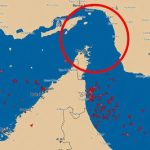
The biggest immediate risk is economic. Global oil markets react fast to instability in the Gulf, especially around the Strait of Hormuz, a narrow shipping route that carries a large share of the world’s oil. Any disruption there pushes energy prices higher.
Morocco imports most of its energy, which means higher global oil prices translate directly into higher fuel and transport costs at home. When fuel prices rise, so do food prices, shipping costs and everyday goods.
Morocco has already faced inflation pressures in recent years due to global supply shocks. A prolonged war could reverse recent progress in stabilizing prices and strain household budgets again.
There is also the risk to investor confidence. Morocco has worked to position itself as a stable gateway between Europe and Africa. But global uncertainty can slow foreign investment, delay tourism decisions and weaken emerging market currencies.
Even if Morocco is not involved in the conflict, investors tend to pull back from regions seen as politically exposed.
Tourism is another area that could be affected. Even when violence is far from Morocco’s borders, wars in the Middle East often affect how travelers see the wider region.
In past escalations, countries across North Africa saw temporary dips in bookings, not because they were unsafe, but because international visitors tend to group the region together in their risk calculations.
That perception alone can be enough to slow reservations. Tourism represents about 7% of Morocco’s GDP and supports hundreds of thousands of jobs, from hotel workers to tour guides to restaurant staff.
A short drop in European visitors can quickly affect cash flow for hotels, airlines and small tourism operators.
Morocco’s tourism sector has been recovering strongly since the pandemic, with record arrivals in recent seasons. A prolonged regional conflict could slow that momentum, even if Morocco itself remains stable.
Politically, the situation is delicate. Morocco restored diplomatic ties with Israel in 2020, deepening cooperation in trade, technology and security.
That relationship has brought economic opportunities and stronger defense coordination. But it also remains controversial among the Moroccan public, especially during periods of Israeli military action in the region.
If the war escalates, the government could face renewed domestic pressure from groups opposed to normalization.
Relations with Iran are limited and have been tense in the past. Morocco has previously accused Tehran of interfering in regional affairs.
That history reduces the likelihood of direct diplomatic fallout, but it reinforces Morocco’s alignment with Gulf Arab partners and Western allies.
Washington recognizes Morocco’s sovereignty over Moroccan Sahara and this support strengthens political ties between the two countries. However, deeper U.S. involvement in a regional war could make Morocco’s alignment more sensitive domestically.
Rephrase in a different way as if you were a native American speaker as a content creation expert and do not talk about yourself or your experience in the text and do not show yourself as an artificial intelligence who wrote and fill the bullet point in the topic and speak the heart of the topic itself and dont take date of blog in ther first and dont take text like box of newsliter subscribe on post from content and romove all linke insert in content and and remove all affiliate disclosure phrases on content like this “This post may contain Amazon or other affiliate links that allow us to earn a small commission at no extra cost to you. Please see our Disclosure Policy for more info” and “#” put in its place bullet point, and romove name of the web site or his links we are take a content from our new creation