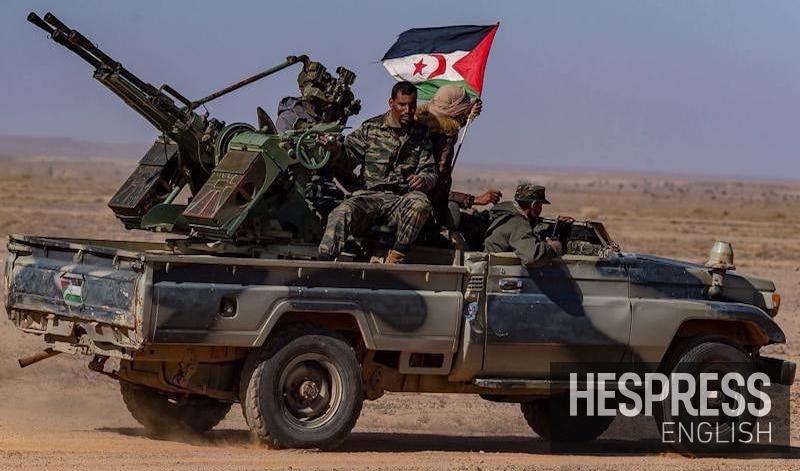
Polisario leaders have again raised the spectre of armed struggle as international momentum increasingly tilts toward Morocco’s autonomy plan, a move analysts see less as a military threat than as an attempt to disrupt a political process that is closing in on a negotiated settlement.
In comments carried by a pro Polisario outlet, Moussa Salma, presented as the “culture minister” of the self declared Sahrawi Arab Democratic Republic, said that “only weapons bring freedom” and argued that negotiations with Morocco are pointless without “elements of force”, explicitly calling for pressure not only on Rabat but also on the United States and other powers.
The remarks come as UN Security Council Resolution 2797 reinforces support for a political solution and as Washington signals growing impatience with protracted diplomacy, openly backing autonomy under Moroccan sovereignty as the most viable outcome.
Jouad El Qasmi, a researcher in international law and international relations, said the rhetoric should be read as a tactical manoeuvre rather than a genuine shift toward war.
“Polisario knows the military balance is decisively in Morocco’s favour, given drones, defensive infrastructure and technological superiority,” he said. “The aim is not victory on the battlefield, but to derail the UN track, inject instability into a fragile Sahelian environment, and force international actors to pressure Morocco into concessions.”
El Qasmi added that the message is also directed inward. With living conditions in the camps stagnating and no tangible political gains after decades, he said, “war talk becomes a tool to manage internal frustration and to justify the continued relevance of the leadership in the absence of a credible horizon.”
He also linked the escalation in tone to the current US approach. “The American push for rapid, pragmatic solutions represents an existential threat to Polisario as a separatist structure,” he said, arguing that Algeria is seeking to slow that momentum indirectly.
“Algiers understands that a US backed settlement would be a strategic win for Morocco, so it uses its proxy to obstruct the process without confronting Washington directly.”
Mohamed Atif, professor of international relations at Chouaib Doukkali University, said the repeated invocation of armed struggle reflects political exhaustion rather than leverage.
“This is an outdated confrontational language that no longer aligns with regional or international realities,” he said. “It signals an inability to transition from ideological mobilisation to pragmatic negotiation based on actual power balances.”
Atif stressed that the international environment has become increasingly hostile to non state actors invoking violence outside recognised legal frameworks. “Far from strengthening their hand, this discourse raises political costs and further isolates them,” he said, adding that it primarily serves as an internal control mechanism to suppress social and humanitarian questions in the camps.
Rephrase in a different way as if you were a native American speaker as a content creation expert and do not talk about yourself or your experience in the text and do not show yourself as an artificial intelligence who wrote and fill the bullet point in the topic and speak the heart of the topic itself and dont take date of blog in ther first and dont take text like box of newsliter subscribe on post from contentand romove all linke insert in content and and remove all affiliate disclosure phrases on content like this “This post may contain Amazon or other affiliate links that allow us to earn a small commission at no extra cost to you. Please see our Disclosure Policy for more info” and “#” put in its place bullet point, and romove name of the web site or his links we are take a content from our new creation, and don’t publish clone new content more than just one time