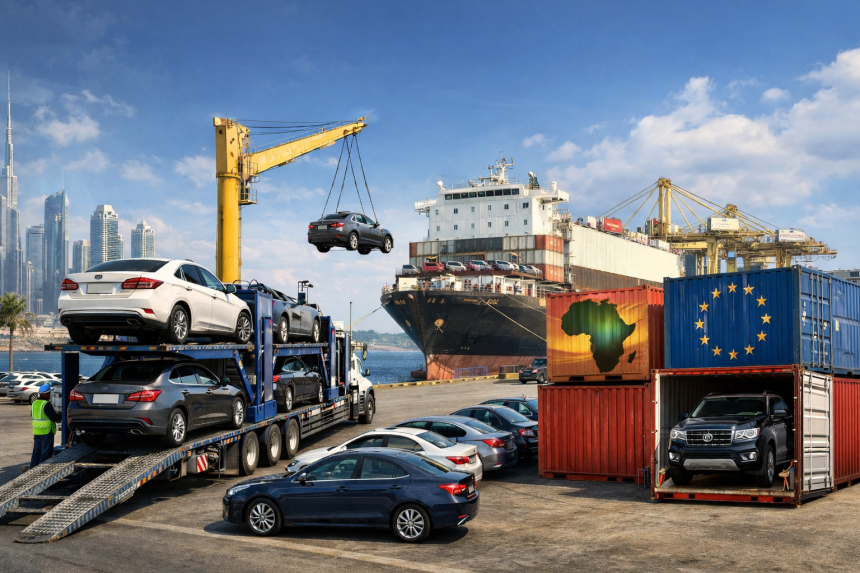
Dubai has earned a strong reputation as one of the world’s most active automotive trading hubs. Buyers from Africa, Europe, Central Asia, and Southeast Asia frequently look to Dubai for vehicle sourcing due to its competitive pricing, wide availability of models, and efficient logistics network. For non-residents, exporting a car from Dubai is entirely legal, but it is regulated and requires compliance with specific procedures. Understanding the Dubai car export rules for foreigners is essential to avoid delays, penalties, or rejected shipments.
This guide explains how the export process works, what foreigners need to prepare, and how to move a vehicle out of Dubai legally and efficiently.
Why Foreign Buyers Choose Dubai for Car Exports
Dubai’s automotive market benefits from low local taxation, a high turnover of vehicles, and strong import channels from global manufacturers. Cars in Dubai are often replaced more frequently than in other markets, which keeps the used-car supply fresh and competitively priced. Combined with world-class port infrastructure and streamlined customs systems, Dubai offers exporters speed, reliability, and scale.
Another key advantage is transparency. Vehicle histories, ownership status, and export documentation are well-regulated, reducing uncertainty for foreign buyers when transactions are handled correctly.
Eligibility for Foreigners Exporting Cars from Dubai
Foreign nationals are legally permitted to export vehicles from Dubai without holding UAE residency or citizenship. Whether you are exporting a single car for personal use or purchasing vehicles in bulk for resale overseas, the law allows it. However, the process differs slightly depending on whether the export is personal or commercial.
For individual exports, the procedures are simpler and can often be managed through dealers or agents. Commercial exporters, on the other hand, may require additional trade licensing and customs registration depending on shipment volume and frequency.
Vehicle Ownership and Legal Clearance
Before a car can be exported, it must be fully owned by the exporter or legally transferred into their name. Any outstanding bank loans, traffic fines, or unresolved legal issues must be cleared first. Vehicles under finance agreements are not eligible for export until the loan is fully settled and the ownership status is updated with the authorities.
The vehicle must also be officially deregistered within the UAE. This step confirms that the car will no longer be driven or registered locally and is a mandatory part of the export process.
Documentation Required for Export
Documentation plays a central role in the export process, and inaccuracies can result in shipment delays or rejection. Exporters must present proof of ownership through the original registration card, along with identification such as a valid passport copy. A bill of sale or purchase invoice is also required to confirm the transaction value and ownership transfer.
Once ownership is verified, the Roads and Transport Authority issues an export certificate. This document officially cancels the local registration and allows the vehicle to be exported. Customs clearance documents are then prepared to authorize the vehicle’s exit from the country, followed by shipping paperwork issued by the logistics provider.
RTA Export Procedure and Temporary Plates
The RTA oversees the deregistration of vehicles for export. After all fines are cleared and documents are verified, the authority issues export plates that allow the vehicle to be driven legally within the UAE for a limited period. These plates are typically used to transport the vehicle from the showroom or storage yard to the port.
Export plates have a strict validity period, and the vehicle must leave the country within that timeframe. Failure to do so may result in fines or the need to restart parts of the process.
Dubai Customs Clearance Process

Once the vehicle reaches the port, Dubai Customs conducts the final clearance. The exporter submits the export declaration, and customs officials verify vehicle identification details such as the chassis and engine number. In some cases, a physical inspection is carried out to ensure that the vehicle matches the declared information.
After clearance approval, the vehicle is officially authorized for export. At this stage, responsibility transitions to the shipping company handling international transport.
Shipping Options for Exported Vehicles
Vehicles exported from Dubai are typically shipped using roll-on/roll-off vessels or container shipping. RoRo shipping is cost-effective and widely used for standard vehicles that are in running condition. Container shipping offers greater protection and is often chosen for high-value, classic, or luxury cars.
Air freight is technically possible but rarely used due to high costs and limited practicality, except for rare or time-sensitive vehicles.
Costs Associated With Exporting a Car
Exporting a car from Dubai involves several cost components, including RTA fees, export plate charges, customs processing fees, and shipping costs. While Dubai does not impose export taxes on vehicles, import duties and taxes may apply in the destination country.
Insurance is optional but strongly recommended, especially for expensive vehicles or long-distance shipments. Costs vary depending on destination, shipping method, and vehicle type.
Destination Country Compliance
One of the most common mistakes exporters make is failing to check import regulations in the destination country. Some countries impose restrictions on vehicle age, emissions standards, or steering orientation. Others require pre-approval or impose high import duties that affect total costs.
Ensuring compliance with destination-country regulations before shipping is essential to avoid customs rejection or costly storage fees upon arrival.
Working With Dealers and Export Agents
Many foreign buyers rely on professional dealers or export agents to manage the process. Experienced agents handle paperwork, customs coordination, and shipping logistics, significantly reducing risk. This is particularly beneficial for first-time exporters or buyers shipping multiple vehicles.
Choosing licensed and reputable agents is critical, as unverified operators may cause documentation errors or financial losses.
Final Thoughts
Exporting a vehicle from Dubai is a structured and legal process when handled correctly. The city’s advanced infrastructure and regulatory clarity make it an attractive source market for international buyers. However, compliance, documentation accuracy, and destination-country awareness are crucial to success.
By understanding the Dubai car export rules for foreigners, exporters can avoid common pitfalls and take full advantage of Dubai’s position as a global automotive export hub.
Rephrase in a different way as if you were a native American speaker as a content creation expert and do not talk about yourself or your experience in the text and do not show yourself as an artificial intelligence who wrote and fill the bullet point in the topic and speak the heart of the topic itself and dont take date of blog in ther first and dont take text like box of newsliter subscribe on post from content and romove all linke insert in content and and remove all affiliate disclosure phrases on content like this “This post may contain Amazon or other affiliate links that allow us to earn a small commission at no extra cost to you. Please see our Disclosure Policy for more info and replace”#” put in its place bullet point, and romove name of the web site or his links we are take a content from our new creation,f content talking about another country for car rental Rephrase content to talk about car rental in morocco, and don’t publish clone new content more than just one time