You can visit Morocco any time of the year. But if you want the sweet spot between pleasant weather, lively cities, and fewer crowds, March to May and September to November are ideal.
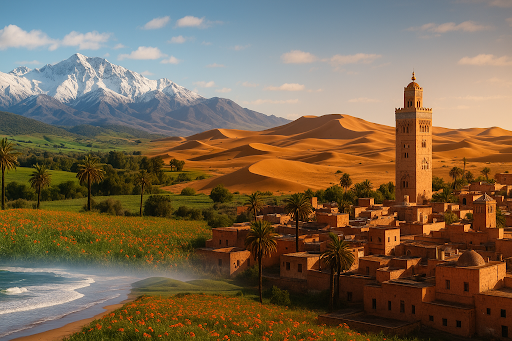
During these months, the days are warm, the nights cool, and the landscapes at their best, from the green valleys of the Atlas Mountains to the glowing sands of the Sahara.
Still, each season brings its own charm. What feels like one country in spring transforms completely by winter. In this guide, you’ll discover how Morocco changes through the year so you can choose the time that matches your travel style.
Morocco Through the Seasons
No two visits to Morocco feel the same. Spring fills the country with colour, summer brings heat and festivals, autumn glows golden, and winter slows everything down. Here’s how each season shapes your experience.
Spring (March–May): The Country in Full Color
If Morocco had a season that everyone falls in love with, it would be spring. The weather is perfectly balanced, warm but not hot, bright but never harsh. Valleys bloom with wildflowers, the Atlas Mountains turn green, and the medinas buzz with life.
It’s the best time for road trips and outdoor adventures. You can hike near Imlil, visit the waterfalls of Ouzoud, or explore Fes and Marrakech before the summer heat arrives.
Crowds are moderate, prices are fair, and the air feels fresh, a combination that makes spring one of the most photogenic times to travel across the country.
Summer (June–August): Hot Days, Cool Coasts
Summer in Morocco is intense inland but surprisingly pleasant on the coast. While Marrakech and Fes can reach 40°C, seaside towns like Essaouira, Agadir, and Tangier stay breezy and cool.
This is beach season, with long afternoons by the Atlantic, surfing lessons, and seafood dinners by the port. Essaouira especially comes alive, hosting music and art festivals throughout July.
It’s also the season of cultural festivals, from Gnaoua rhythms in Essaouira to traditional music in Fes. Inland, tourism dips slightly, which means great deals on hotels and fewer crowds at major landmarks.
Autumn (September–November): The Sweet Spot
Autumn feels like a second spring in Morocco. Days are warm, sunlight is gentle, and evenings glow gold. The crowds thin out after summer, leaving the roads quieter and the medinas more relaxed.
It’s an ideal time for desert trips and photography, as the Sahara’s heat becomes bearable again and the dunes catch that perfect honey-colored light. Cities like Meknes and Rabat are at their most comfortable, and the markets are full of freshly harvested produce.
Many locals say this is when Morocco feels most balanced, peaceful yet vibrant, alive but never rushed.
Winter (December–February): Quiet Roads and Snowy Peaks
Winter is Morocco’s secret season. The days are crisp and sunny, the crowds are gone, and the mountains sparkle with snow. You can even ski in Oukaïmeden, just a couple of hours from Marrakech.
Down south, the Sahara Desert turns cool and quiet, cold at night but perfect for day treks or camel rides without the summer heat. Meanwhile, Chefchaouen’s blue walls pop vividly under the soft winter light.
It’s also the best time to explore Morocco’s imperial cities without the rush. You’ll find calm medinas, cozy roads, and a more local rhythm to life.

A Country That Changes With the Seasons
When to Go Based on What You Love Doing
Match your travel plans to the season that fits your style best.
| Season | Activities |
| Spring (Mar–May) | Hiking, sightseeing, exploring medinas, photography |
| Summer (Jun–Aug) | Surfing, coastal trips, music festivals, late-night walks |
| Autumn (Sep–Nov) | Desert tours, cultural visits, road trips, ideal weather |
| Winter (Dec–Feb) | Mountain treks, quiet city escapes, skiing, desert camping |
Events Worth Planning Around
Morocco’s festivals and events bring local life to the streets with a colorful mix of music, food, and culture.
If you’re planning a trip in 2026, here are some annual celebrations that locals and travellers alike look forward to each year.
Fes Festival of World Sacred Music (Fes, May–June)
In the maze-like lanes of Fes, music takes over. Artists from around the world gather to perform in old palaces and courtyards, blending spiritual songs, Sufi chants, and orchestral sounds that seem to rise straight into the night sky.
Gnaoua World Music Festival (Essaouira, June)
Essaouira hums with rhythm as drums, guitars, and voices fill the coastal air. Known as Africa’s “Woodstock”, this laid-back seaside gathering mixes ancient Gnaoua beats with jazz and world music. As the waves crash nearby, it feels more like a spiritual journey than just a concert.
Mawazine Festival (Rabat, late May–early June)
Rabat transforms into one huge open-air stage during Mawazine. Big-name performers share the spotlight with Moroccan stars, while lights, fireworks, and a lively crowd turn the capital into a nonstop celebration of sound and culture.
Tan-Tan Moussem (Tan-Tan, May)
Down in the southern desert, Morocco’s nomadic tribes reunite each year for the Tan-Tan Moussem. Recognised by UNESCO, it’s a living celebration of tradition, complete with camel parades, folk dances, and tents filled with food, crafts, and stories passed down through generations.
Rose Festival (El Kelaa M’Gouna, May)
When spring arrives, the Valley of Roses blushes in shades of pink. Locals mark the harvest with music, parades, and stalls overflowing with rosewater and perfumes. It’s a festival that smells as beautiful as it looks.
Cherry Festival (Sefrou, June)
In Sefrou, the cherry harvest is cause for joy. The town bursts into life with market stalls, local music, and parades. Each year, a “Cherry Queen” is crowned to lead the festivities, a sweet tribute to Morocco’s love of community and celebration.
Timitar Music Festival (Agadir, July)
Agadir’s beachfront becomes a playground for sound during the Timitar Festival. Amazigh (Berber) artists share the stage with global performers, drawing locals and travelers to dance barefoot on the sand as the sun dips below the ocean.
Imilchil Marriage Festival (Atlas Mountains, September)
High in the Atlas Mountains, love and tradition meet at the Imilchil festival. This centuries-old Berber matchmaking event brings together families, music, and markets in one of Morocco’s most scenic and soulful settings.
Marrakech International Film Festival (Marrakech, December)
As the year ends, Marrakech turns cinematic. Filmmakers, actors, and audiences gather for premieres and red-carpet moments in the city’s glowing squares. It’s where Moroccan hospitality meets international glamour.
Ramadan (Nationwide, dates vary)
During Ramadan, the country slows during the day and comes alive at night. Streets glow with lanterns, the smell of fresh bread fills the air, and families gather for shared meals. It’s a time of reflection, generosity, and connection, a feeling visitors never forget.
Month-by-Month Snapshot
Here’s what each month in Morocco feels like.
| Month | Short Description |
| January | Clear skies, cool air, quiet mountain trails. |
| February | Crisp mornings and perfect desert sunrises. |
| March | Blooming valleys, ideal weather, lively souks. |
| April | Bright days, wildflowers, and outdoor adventures. |
| May | Warm but not hot, great for road trips. |
| June | Start of summer festivals with cool coastal winds. |
| July | Hot inland and perfect waves in Essaouira. |
| August | Peak beach season and lively coastal nights. |
| September | Calm weather, soft light, fewer tourists |
| October | Golden hues and great conditions for Sahara tours. |
| November | Warm days, clear skies, quiet medinas. |
| December | Sunny days, snowy peaks, cosy riads. |
Start Planning Your Moroccan Trip with Car Rental
Morocco is best enjoyed at your own pace, whether that means cruising along the Atlantic coast, winding through the Atlas Mountains, or crossing the desert toward Merzouga.
👉 Plan your Moroccan trip with a car rental and explore the country your way, from city streets to scenic highways.
FAQ About the Best Time to Visit Morocco
What is the cheapest time to visit Morocco?
Summer, between June and August, is generally the cheapest period, except in coastal towns like Essaouira or Agadir. Prices also drop during Ramadan, when fewer tourists visit.
When is it hottest in Morocco?
July and August are the hottest months, especially inland. Marrakech and Fes often reach 40°C or more, while coastal cities stay around 26–30°C thanks to ocean breezes.
When is Morocco coldest?
December to February are the coldest months. Nights are chilly in the mountains and desert, but most days stay sunny and pleasant around 15–20°C.
Is Ramadan a good time to travel?
Yes, travelling during Ramadan can be a peaceful and meaningful experience. Cities are quieter during the day but come alive after sunset with lights, music, and evening meals. Some restaurants may close during daylight hours, so plan your meals ahead.
Rephrase in a different way as if you were a native American speaker as a content creation expert and do not talk about yourself or your experience in the text and do not show yourself as an artificial intelligence who wrote and fill the bullet point in the topic and speak the heart of the topic itself and dont take date of blog in ther first and dont take text like box of newsliter subscribe on post from content and romove all linke insert in content and and remove all affiliate disclosure phrases on content like this “This post may contain Amazon or other affiliate links that allow us to earn a small commission at no extra cost to you. Please see our Disclosure Policy for more info and replace”#” put in its place bullet point, and romove name of the web site or his links we are take a content from our new creation,f content talking about another country for car rental Rephrase content to talk about car rental in morocco, and don’t publish clone new content more than just one time