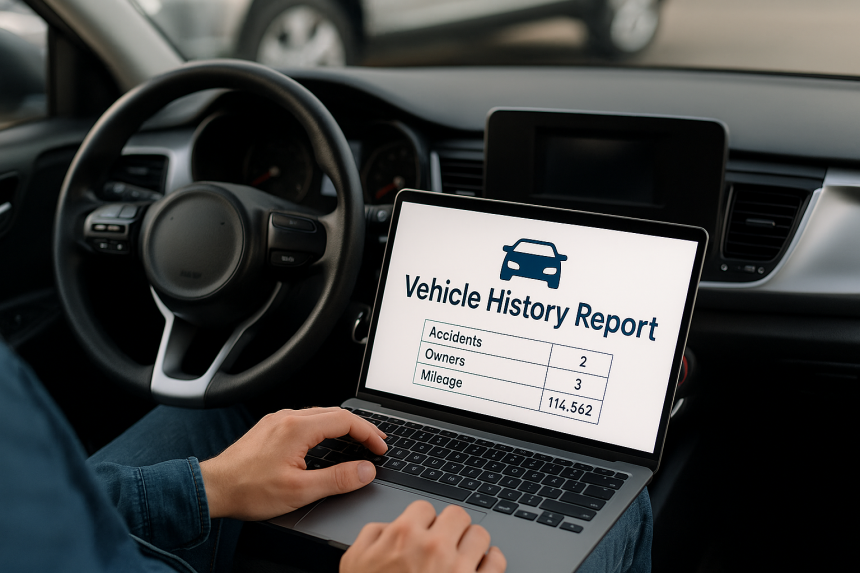
Buying a used car is an exciting milestone, but it comes with risks. A shiny exterior and low mileage might look appealing, but what if the car has been in a major collision? Hidden damage can cause ongoing safety problems, reduce performance, and increase long-term repair costs. That’s why you must check car accident history before buying.
In this guide, we’ll explain the five essential steps that every smart buyer should take, covering accident history checks, service records, recalls, title verification, and professional inspections. By the end, you’ll know exactly how to protect yourself from costly surprises.
Why You Must Check Car Accident History Before Buying
When shopping for a used car, ignoring accident history can be a costly mistake. Past collisions impact:
-
Safety: Structural damage weakens crash protection.
-
Performance: Misaligned frames cause steering and suspension issues.
-
Resale Value: Cars with accident records typically sell for less.
-
Insurance: Some providers charge higher premiums for previously damaged cars.
By making it a priority to check car accident history before buying, you’ll avoid overpaying and ensure the vehicle is truly safe.
Step 1: Gather the Vehicle Identification Number (VIN)
The first step in checking car history is to obtain the VIN. This 17-character code is your gateway to reports about accidents, recalls, and service records. Look for it:
-
On the dashboard near the windshield
-
Inside the driver’s side doorframe
-
On the car’s registration or insurance papers
With the VIN in hand, you can move forward and check the car accident history before buying using online databases.
Step 2: Tools to Check Car Accident History Before Buying Online
In the UAE, buyers have access to several official and private tools to check car accident history before buying. While these may not catch every unreported minor crash, they offer reliable insights when used together.
1. Emirates Vehicle Gate (EVG): Traffic Accidents Inquiry
The EVG (Emirates Vehicle Gate) platform allows users to view accident records by entering the chassis or VIN number.
-
Log in/register using UAE Pass.
-
Use the Accident Inquiry (Traffic Accidents Management) section.
-
The system returns recorded incidents (date, location) associated with that vehicle.
2. Ministry of Interior (MOI) Dubai / UAE
Through the MOI’s digital services, you can check vehicle history and accident reports using the VIN or licence plate.
3. Abu Dhabi Police: Accidents’ Inquiry
If the vehicle was registered or involved in an accident in Abu Dhabi, the Abu Dhabi Police website provides an Accidents’ Inquiry service using the chassis number.
4. Dubai Police / Dubai RTA: Vehicle History & Accident Report
For Dubai-registered vehicles:
-
The Dubai Police portal or app may allow viewing accident reports tied to a vehicle.
-
The RTA Technical Vehicle Status Certificate (issued by RTA for AED 120) includes details such as past inspections, faults, and number of previous owners. It may also flag accident or impound history.
5. Third-Party / Private VIN / History Check Services
For additional depth or for checking imported vehicles, consider paid services that compile global and local data:
-
Detailed Vehicle History offers UAE VIN checks (accident, title, ownership, auction history).
-
VehicleReport (UAE‐based) provides a combined local & international history report.
-
CarReport, Carfax Middle East, and similar providers may also service UAE markets.
Limitations & Tips for UAE Checks
-
Some accidents (private settlements, minor damages) may never be reported to authorities, so no tool will be 100% comprehensive.
-
For vehicles imported recently, UAE databases may not capture the pre-UAE accident history. Use global VIN tools for that.
-
Using multiple sources is best: combine EVG + MOI + Dubai Police + private report to cross-verify.
-
Always ask the seller for service records, repair invoices, and physical inspection (to catch anything unreported).
While no system captures every minor accident, these tools remain the most effective way to check car accident history before buying.
Step 3: Service Records vs. Accident Reports: What to Check Before Buying
Accident-free doesn’t always mean trouble-free. That’s why reviewing service history is as important as accident reports. Look for:
-
Regular maintenance like oil changes and tyre rotations.
-
Major repairs done at authorized service centres.
-
Consistency in records, with minimal gaps.
-
Recurrent issues that suggest chronic problems.
A transparent service history is a positive sign. Sellers willing to share this information usually have nothing to hide, making it easier to trust the car’s condition.
Step 4: Always Check Recalls Before Buying a Car (UAE)
Even if a car hasn’t been in an accident, unresolved recalls can create safety hazards. In the UAE, recall checks are simple and usually free:
-
Contact the authorised dealer (e.g., Al-Futtaim, Arabian Automobiles, Al Nabooda, Al Tayer) and provide the VIN.
-
Check the manufacturer’s UAE website for recall announcements.
-
Confirm with the seller that recall repairs were carried out at an authorised service centre.
Most recalls in the UAE are handled free of charge by the dealer. If a recall is open, the seller should provide proof that it has been addressed. Always make sure recalls are closed before finalising your purchase.
Step 5: Verify Registration and Accident Records (UAE)
Unlike some countries where cars carry “clean”, “salvage”, or “rebuilt” titles, the UAE system works differently. Instead, buyers must check vehicle records through official authorities:
-
RTA in Dubai: Apply for a Technical Vehicle Status Certificate to see inspection history, ownership transfers, and possible accident or impound records.
-
Emirates Vehicle Gate (EVG) / MOI:Use the VIN or chassis number to see accident and insurance reports.
-
Imported Vehicles: If the car was brought from abroad, ask for international history reports (Carfax, VehicleReport, Detailed Vehicle History) to see if it was ever written off in another country.
If the records show the car was previously written off or failed inspections, think carefully before proceeding. A car may still pass UAE registration after repairs, but it can carry hidden risks and reduced resale value.
Step 6: Hire a Mechanic to Double-Check Car Accident History Before Buying
Online records are helpful, but they don’t tell the full story. A professional mechanic can:
-
Inspect for paint mismatches, welds, or panel gaps.
-
Check the undercarriage for hidden frame damage.
-
Test drive the car to detect performance issues.
-
Run diagnostics to reveal hidden engine or electronic faults.
By combining digital tools with a mechanic’s expertise, you’ll ensure you check car accident history before buying in the most complete way possible.
Step 7: Ask the Seller Direct Questions
Even with all the data in hand, direct communication with the seller is essential. Ask:
-
Has the car ever been in an accident?
-
Can you provide full service records?
-
Were all manufacturer recalls addressed?
-
May I see the title and registration documents?
An honest seller should provide clear answers. If they hesitate, treat it as a warning sign.
Step 8: Use Insurance Records to Confirm Accident History (UAE)
In the UAE, access to full insurance claim history is more limited compared to some other countries. However, you can still use a few options to cross-check accident details:
-
Ask the seller to provide claim history from their insurance company. Some insurers can issue a summary of past claims on request.
-
Check with Emirates Vehicle Gate (EVG) or MOI, which may list accidents reported to police or insurance providers.
-
Cross-verify with service invoices if the car was repaired under insurance, as workshops often note claim numbers.
Keep in mind that not every accident is reported through insurance. Minor damages may be privately settled. That’s why insurance records should be treated as one more layer of verification, alongside official reports, service records, and a mechanic’s inspection.
If you’re looking for a trusted platform to rent to compare cars before making a purchase decision, check out our car rental marketplace.
Conclusion
Used cars can be a fantastic value, but only if you know what you’re buying. By following these five essential steps to check car accident history before buying, you’ll protect yourself from unsafe vehicles and hidden costs.
Always review accident reports, service history, recalls, and title documents. Then back it up with a professional inspection and honest communication with the seller. When you combine all these steps, you’ll make a confident purchase that’s both safe and financially sound.
Rephrase in a different way as if you were a native American speaker as a content creation expert and do not talk about yourself or your experience in the text and do not show yourself as an artificial intelligence who wrote and fill the bullet point in the topic and speak the heart of the topic itself and dont take date of blog in ther first and dont take text like box of newsliter subscribe on post from content and romove all linke insert in content and and remove all affiliate disclosure phrases on content like this “This post may contain Amazon or other affiliate links that allow us to earn a small commission at no extra cost to you. Please see our Disclosure Policy for more info and replace”#” put in its place bullet point, and romove name of the web site or his links we are take a content from our new creation,f content talking about another country for car rental Rephrase content to talk about car rental in morocco, and don’t publish clone new content more than just one time