Driving in Morocco
Driving in Morocco is safe and genuinely enjoyable once you understand how the roads work and what to expect from local traffic. The country has a solid network of highways, dramatic scenery, and long stretches of open road that make travelling by car feel surprisingly relaxing.
This guide walks you through everything you need to know, from safety and rules to licences, documents, and a few honest tips for visitors coming from the UK.
Is It Safe to Drive in Morocco?
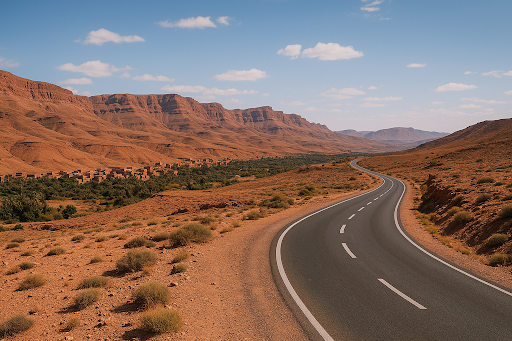
The short answer is yes. It’s safe to drive in Morocco as long as you use normal caution. Most of the main roads, especially the highways connecting major cities like Casablanca, Marrakech, Tangier and Agadir are well maintained and comfortable to drive on. Even longer routes across the Atlas Mountains or towards the desert tend to be in good condition, though they may be winding or narrow in parts.
Drivers, however, can be unpredictable. In cities, traffic can feel lively and sometimes chaotic, especially during peak hours. Motorbikes, taxis, and carts all share the road, and they don’t always follow strict lane discipline. But once you get used to the flow, it becomes manageable. Police checkpoints are common, but they are usually routine and friendly. Officers may simply ask for your documents, check your licence, and let you continue.
The best way to stay calm is to keep a steady pace, avoid rushing, and watch the road ahead. Morocco rewards confident, relaxed driving far more than fast reactions.
Can I Drive in Morocco with a UK Licence?
Yes, you can. A standard UK driving licence is fully valid for short stays of up to 12 months in Morocco. This applies to both tourists and business visitors. Most car rental companies accept UK licences without any issue, as long as the licence is in good condition and clearly readable.
That said, some rental agencies prefer an International Driving Permit (IDP) as an added form of identification. It’s not a legal requirement for most travellers, but it can be helpful in situations where a rental company is strict or when you travel to more rural regions where police may not be familiar with foreign licences.
International Driving Permit for Morocco
An International Driving Permit is not compulsory for UK visitors, but it can make things easier. It is essentially a translation of your existing license, recognized in many countries. In the UK, you can get an IDP from most major post offices, and the process is quick; you usually walk in, show your license, take a photo if needed, and receive the permit on the spot.
Even if you never end up showing it, an IDP can be useful during insurance checks, at some police checkpoints, or when renting from smaller agencies that prefer extra documentation. It’s a small, inexpensive precaution that adds peace of mind.
Rules and Road Conditions
Morocco follows simple and clear driving rules. Cars drive on the right-hand side, meaning UK drivers will need a moment to adjust, especially at roundabouts. Seatbelts are mandatory for everyone in the vehicle. Using a mobile phone while driving is illegal unless you have a hands-free setup. Alcohol limits are extremely strict, so avoid drinking if you plan to drive.
Urban driving can feel chaotic, with frequent lane changes and a mix of vehicles. Highways, on the other hand, are smooth, modern, and well organized. Toll roads connect many major cities, and the toll fees are reasonable.
Speed cameras are common, and police regularly monitor traffic, especially at city entrances. Fines are issued on the spot, so sticking to the limits is the best choice.
Speed Limits and Enforcement
The standard limits are easy to remember:
- 60 km/h in cities
- 100 km/h on open roads
- 120 km/h on highways
Speed cameras, radar checks, and marked police checkpoints appear frequently, especially on long highways between major towns.
Fuel and Parking
Fuel stations are plentiful along major routes and even in many rural towns. Both petrol and diesel are available, and prices are generally lower than in the UK. Most stations accept cards, though keeping a bit of cash helps in remote areas.
When it comes to parking, medinas, the historic old towns, are rarely car-friendly. Streets are narrow, and some areas are restricted. In these spots, it’s best to park in a supervised lot at the edge of the medina and walk inside. In modern cities, street parking is straightforward, although you might find attendants who help guide your parking in exchange for a small tip.
Start Planning Your Moroccan Trip with Car Rental
How Moroccans Drive
Moroccan drivers have their own rhythm. In big cities, driving tends to be assertive. People may change lanes quickly or edge forward at junctions. Horns are used lightly, often as a friendly signal rather than an angry one. On highways, driving becomes far more relaxed, with wide lanes and long straight stretches.
You may see frequent overtakes on rural roads, which is normal locally. Keep a steady line, don’t swerve, and allow space for faster traffic. Most road users are used to sharing the road and will adapt once they understand your pace.
Tips for a Smooth Drive
- Download offline maps before long trips.
- Keep small cash for tolls and parking.
- Avoid driving through rural areas at night.
- Ensure your rental car has a working spare tire.
- Carry water, especially on summer desert routes.
What to Do in Case of an Accident or Police Check

If you have an accident or something goes wrong, stay with the vehicle and call your rental company immediately. They will guide you through the steps, arrange assistance, or contact the right authorities. If the situation requires police involvement, officers will usually arrive quickly and complete a report.
Embassies, including the British Embassy in Rabat, can only help with serious incidents, so your rental company should be your first call.
The Freedom of Driving Across Morocco
“I’ve driven from the Atlas Mountains down to the Sahara, and the feeling is something no guided tour can replicate. You move at your own pace, stop when a view catches your eye, and notice how the scenery shifts little by little, such as red cliffs, palm valleys, dusty plains, and bright blue sky. Morocco opens up in a different way when you’re the one behind the wheel. The road becomes part of the story, not just a way to reach the next city.”
FAQ About Driving in Morocco
Here are some of the most common questions travellers ask before getting behind the wheel in Morocco, answered simply and honestly.
Is it safe to drive in Morocco at night?
Driving at night outside the main cities isn’t recommended. Many rural roads have limited lighting, and it’s not unusual to find animals or slow-moving vehicles on the road after dark. Within cities you’ll be fine, but for long-distance travel, stick to daytime hours.
Do I need an International Driving Permit?
A UK driving licence is accepted in Morocco, and most visitors rely on it without any issues. Still, an International Driving Permit can be handy, especially if a rental company asks for it or if you’re stopped at a police checkpoint in a rural area. It’s cheap, easy to get, and offers extra peace of mind.
What side of the road do Moroccans drive on?
Morocco drives on the right-hand side. Overtaking is done on the left, just like in most European countries. If you’re coming from the UK, it takes a moment to adjust, but you’ll get used to it quickly.
Are Moroccan police checkpoints common?
Yes, you’ll see them fairly often on the roads between towns. They’re usually routine and friendly. Officers might check your licence, passport, and rental papers; nothing complicated. As long as your documents are in order, you’ll be on your way in a minute or two.
Is GPS reliable in Morocco?
GPS works well across the country, even in more remote regions. However, it’s smart to download offline maps before long journeys, since mountain areas and desert routes can have patchy signal. In big cities, avoid following GPS into narrow medina alleys; some streets aren’t meant for cars at all.
Rephrase in a different way as if you were a native American speaker as a content creation expert and do not talk about yourself or your experience in the text and do not show yourself as an artificial intelligence who wrote and fill the bullet point in the topic and speak the heart of the topic itself and dont take date of blog in ther first and dont take text like box of newsliter subscribe on post from content and romove all linke insert in content and and remove all affiliate disclosure phrases on content like this “This post may contain Amazon or other affiliate links that allow us to earn a small commission at no extra cost to you. Please see our Disclosure Policy for more info and replace”#” put in its place bullet point, and romove name of the web site or his links we are take a content from our new creation,f content talking about another country for car rental Rephrase content to talk about car rental in morocco, and don’t publish clone new content more than just one time