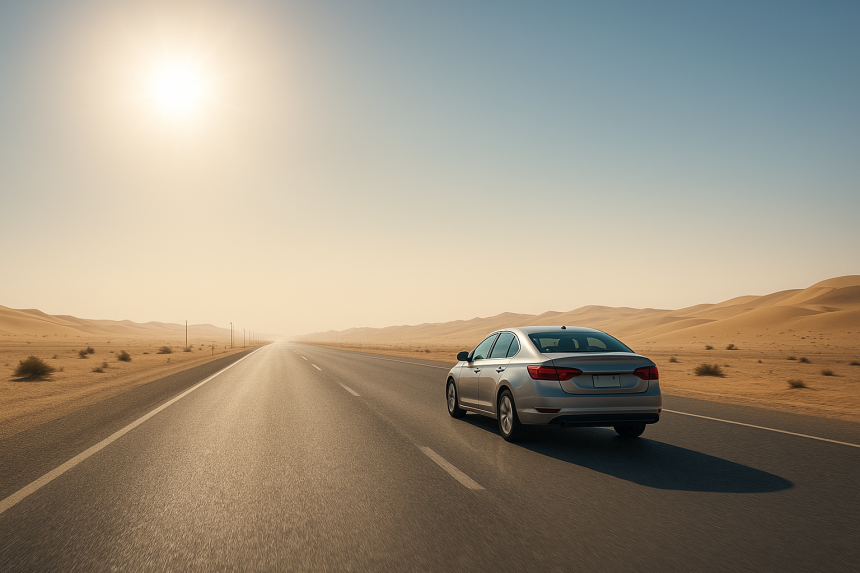
Top 5 Safety Tips for Driving in UAE Heat
1. Plan Driving Before Peak Heat Hours
Driving in UAE heat during midday (typically 1 pm–5 pm) significantly increases accident risk. Studies report up to a 20% higher accident rate during these hours due to glare, dehydration, and reduced focus. By driving early in the morning or late in the evening, when temperatures are lower and traffic is lighter, you minimise fatigue and improve visibility. Short trips during cooler periods also reduce strain on your car’s cooling system and tires, making your journey safer and more efficient.
2. Ensure Proper Vehicle Maintenance
Hot weather puts significant stress on engines and cooling systems. Under the UAE’s “Safe Summer” campaign, authorities recommend checking coolant, engine oil, belts, hoses, and battery before any trip. Tire pressure must be monitored closely, as heat causes it to fluctuate. Keeping tires properly inflated helps prevent blowouts, which are more common in summer.
In addition, always keep a dry‑powder fire extinguisher (1–2 kg) in the car. According to the International Fire & Safety Journal, 43% of vehicle fires in 2024 were caused by extreme heat. Regular inspections and proper maintenance are not just good practice; they’re critical for safety when driving in UAE heat.
3. Use Shade, Sunshades, and Ventilation
Car interiors parked in direct sunlight can reach 60°C, damaging upholstery and creating dangerous conditions for passengers, especially children and the elderly. According to Road Safety UAE, using reflective sunshades significantly reduces cabin temperature.
Whenever possible, park in shaded areas or covered garages. If you must park in the sun, crack windows slightly to improve ventilation. Before entering, open doors or windows briefly to release trapped heat. When driving, use recirculated air conditioning to cool the cabin faster while keeping the driver alert and comfortable during long trips.
4. Stay Hydrated and Avoid Heat Fatigue
Even inside air‑conditioned cars, drivers can suffer from dehydration and heat fatigue. Always keep bottled water in your vehicle and drink regularly. The heat‑index values in coastal UAE cities can exceed 50°C, increasing the risk of dizziness and delayed reaction times.
Plan rest stops in shaded or air‑conditioned areas, especially on long trips. Fatigue affects concentration and decision‑making, which is why hydration is as important as mechanical preparation when driving in UAE heat. A few extra breaks can dramatically improve safety on highways, especially for tourists unfamiliar with the climate.
5. Drive Cautiously: Reduce Speed and Maintain Distance
Extreme heat in the UAE doesn’t just make driving uncomfortable—it poses real risks to both drivers and vehicles. With summer temperatures frequently soaring above 45°C (113°F), your car’s components are under immense pressure, and your reaction times can be compromised due to heat-related fatigue or dehydration.
Heat and High-Speed Driving: A Risky Combination
While UAE highways legally permit speeds of up to 160 km/h, Dubai’s added speed buffer can push that up to 180 km/h. However, Gulf News and automotive safety experts strongly advise reducing your speed in extreme heat. A safer range of 120–140 km/h helps protect not only your safety but also the mechanical integrity of your vehicle.
At high speeds, your engine works harder, generating more heat that compounds with the already scorching ambient temperature. Tyres, especially if under-inflated or worn, become more prone to blowouts as air pressure rises from friction and hot road surfaces. Even premium tyres can fail under sustained high speeds in such conditions.
Keep a Safe Distance and Stay Alert
In hot weather, your vehicle’s ability to brake efficiently may be affected, and your own reflexes may be slower. Maintaining a generous following distance from the car ahead of at least 3–5 seconds is critical. This buffer gives you more time to react if something goes wrong, like sudden braking or tyre failure.
Watch for early warning signs of trouble, including:
-
Bulging or cracking tyres
-
Diminished air conditioning performance
-
Engine temperature creeping toward the red zone
-
Unusual smells, which could indicate overheating fluids
If any of these appear, it’s safer to pull over and inspect than to risk a breakdown or accident.
Vehicle Maintenance in Hot Weather
Routine vehicle checks become even more important during summer. Before any long journey:
-
Check tyre pressure (including the spare) while the tyres are cool
-
Inspect coolant levels and top up if needed with a recommended mix
-
Test your battery, as excessive heat accelerates battery fluid evaporation
-
Ensure your air conditioning system is fully functional, not just for comfort, but to prevent driver fatigue
Many workshops in the UAE offer summer-specific maintenance packages. Consider scheduling one to avoid preventable issues.
Looking to rent a car during the summer months? Read this guide on the best cars to rent!
Conclusion
Driving in UAE heat demands preparation, awareness, and discipline. By planning trips outside peak hours, maintaining your vehicle, staying hydrated, and following safe driving practices, you significantly reduce the risk of accidents and mechanical failures. With the UAE’s rising summer temperatures, these measures are no longer optional; they are essential for every driver who values safety and peace of mind on the road.
Rephrase in a different way as if you were a native American speaker as a content creation expert and do not talk about yourself or your experience in the text and do not show yourself as an artificial intelligence who wrote and fill the bullet point in the topic and speak the heart of the topic itself and dont take date of blog in ther first and dont take text like box of newsliter subscribe on post from content and romove all linke insert in content and and remove all affiliate disclosure phrases on content like this “This post may contain Amazon or other affiliate links that allow us to earn a small commission at no extra cost to you. Please see our Disclosure Policy for more info and replace”#” put in its place bullet point, and romove name of the web site or his links we are take a content from our new creation,f content talking about another country for car rental Rephrase content to talk about car rental in morocco, and don’t publish clone new content more than just one time