QatarEnergy has announced an ambitious plan to significantly enhance local solar energy generation by constructing new power plants in Dukhan. These facilities are poised to become some of the largest solar power plants globally, effectively more than doubling Qatar’s existing solar energy capacity.
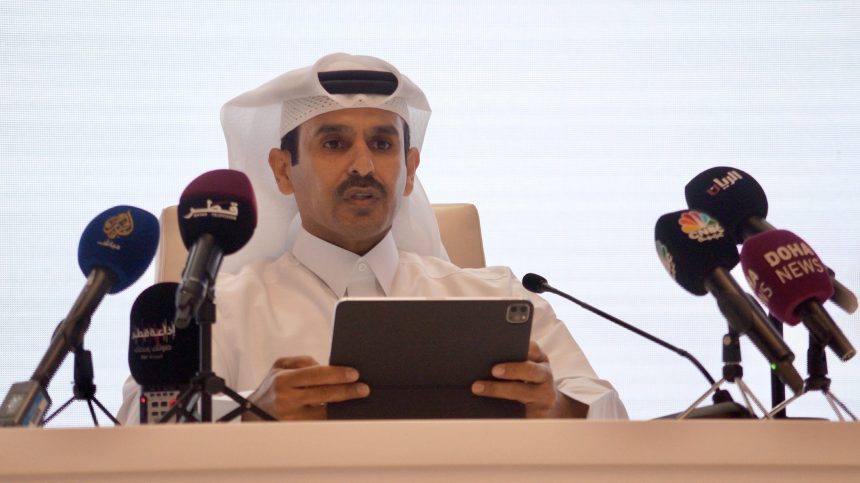
In a recent press conference, QatarEnergy’s President and CEO, Saad Sherida Al-Kaabi, revealed that the company aims to establish itself as the world’s leading exporter of urea. This will be accomplished through the development of a new production complex, which is expected to increase output from the current six million tonnes per annum (MTPA) to an impressive 12.4 MTPA by 2030—an increase of 106 percent.
Al-Kaabi outlined that the new facility will not only double Qatar’s urea production but also bolster global food production and enhance food security. Production from the facility’s initial urea train is projected to begin before this decade concludes. He emphasized the rising demand for urea in food production as the world’s population grows.
To facilitate this expansion, QatarEnergy plans to build three ammonia production lines, which will provide the necessary feedstock for four new mega urea production trains located in Mesaieed Industrial City. This initiative is part of Qatar’s long-standing commitment to increasing ammonia and urea production over the past 50 years.
Additionally, QatarEnergy has partnered with the Qatar Fertilizer Company (QAFCO) to work on the Blue Ammonia project—set to be the largest of its kind in the world—with production expected to start in early 2026.
Regarding solar energy, the new Dukhan plant will have a capacity of 2,000 megawatts, significantly boosting Qatar’s solar output. Key projects that contribute to this increasing capacity include the Al-Kharsaah solar power plant, which commenced operations in 2022 with an 800-megawatt capacity, and two other plants in Ras Laffan and Mesaieed, which together will produce 875 megawatts. Al-Kaabi indicated that operations from these plants are anticipated to begin by the end of this year.
By integrating the new Dukhan solar power plant into the existing network, Qatar aims to achieve its sustainability objective of generating around 4,000 megawatts from solar energy by 2030, accounting for 30 percent of the nation’s total electricity production.
Al-Kaabi characterized these announcements as a continuation of Qatar’s dedication to fulfilling global energy needs while adhering to the highest safety, health, and environmental standards in project development. QatarEnergy’s specialized teams will start necessary engineering studies immediately to ensure successful implementation of these mega projects.