Babies wrapped in blood-soaked shrouds, fathers weeping over lifeless children, hospitals overwhelmed with the wounded…Samar Abu Elouf, doesn’t just photograph Gaza’s pain, she lives it. It’s her homeland, her city and her people.
As she raises a camera to her eye and snaps, Samar makes no attempt to hide her tears while capturing another moment of agony in Gaza, the result of Israel’s restless bombing since October 2023.
“It would always be a child,” recalls Samar Abu Elouf, an award-winning Palestinian photojournalist and mother of four, speaking to Doha News from her current home in Doha, Qatar, after being evacuated from the Gaza Strip last year.
“Before photographing a dead child, I always made sure it wasn’t one of my own,” she confesses. “I hold my breath for a second…and then continue. “
She has seen too many children die. Too many parents collapse in agony.
“I always cry behind the camera, every night I cry without anyone seeing me, but .. the message must be delivered.”
Her lens never wavered.. even as the world around her crumbled.
Samar Abu Elouf’s photographs are raw, heartbreaking, and courageous. They do not just document Israel’s latest war on Gaza; they expose the resilience of her people forced to survive the unthinkable.
A self-taught photojournalist from Gaza, Samar has spent over a decade capturing life under siege in her homeland. Since 2010, she has chronicled daily existence, war, and the long shadow of Israel’s war on the besieged enclave and rest of the Palestine.
She became a photojournalist at 26, a mother of three with no formal training, no equipment of her own.
She borrowed cameras, some cracked, others outdated and taught herself to shoot. “I found my passion in photography as a way to tell stories,” she says. “Especially the stories of children.”
One of her dreams when she first picked up a camera was to create an exhibition about the children of Gaza.
“I wanted those photos to travel the world so the world would know about them, and their beauty.” The photos did travel far and wide, and people did see the children of Gaza. But not as she had imagined.
They lay wrapped in white shrouds, stained with blood — victims of the relentless Israeli bombardment on Gaza since October 2023. Nothing could have prepared her for the unbearable weight of that reality.
“Even when missiles are falling and everyone is screaming…”
Samar says she has worked on assignments for The New York Times, Reuters, Middle East Eye, and others. She has covered everything from the Great March of Return protests to the Covid pandemic for the International Committee of the Red Cross.
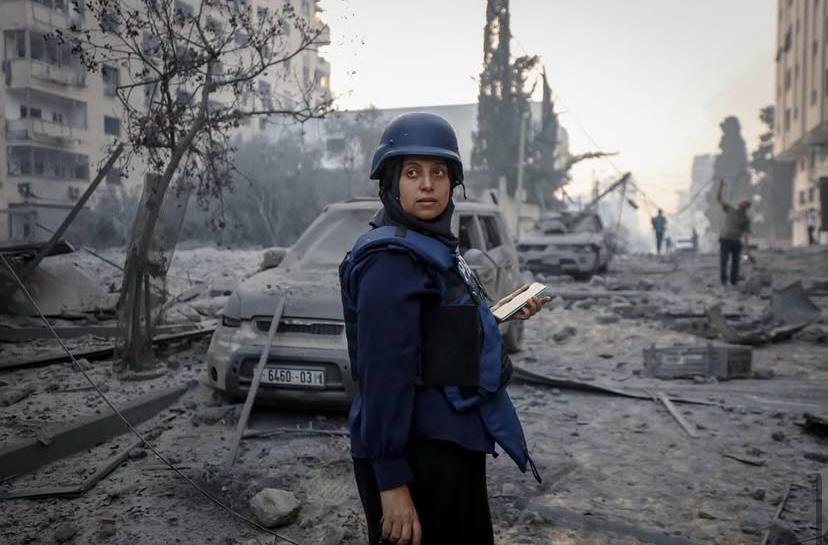
In one now-famous photo, she’s seen wearing a blue plastic bag as a press vest and a cooking pot as a helmet. That was all she had for protection.

In May 2021, she covered the eleven-day war and Israel’s strikes on Gaza for The New York Times, during which more than 230 Palestinians were killed, including members of her own family.
When her home was destroyed in late 2023, she was forced to flee with only two books and her photo archive. What her lenses saw before she left, never stopped haunting her.
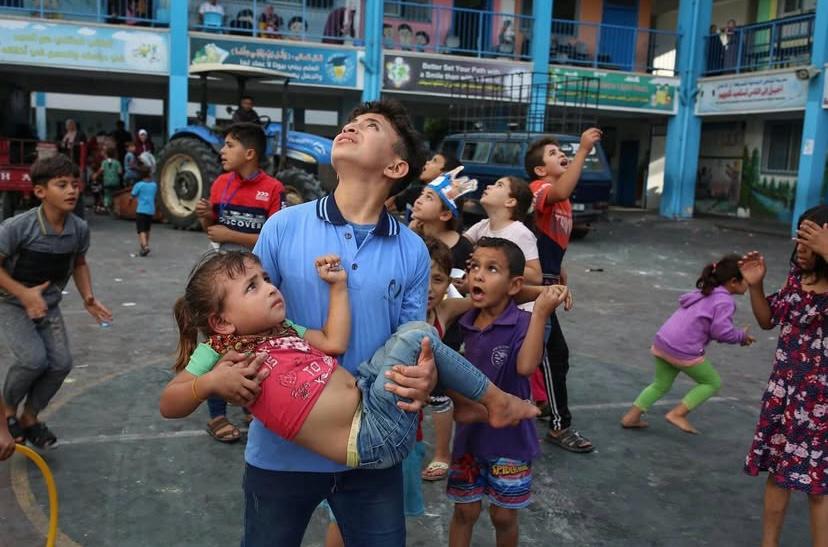
She captured moments of unimaginable grief: mothers screaming over lifeless babies, fathers cradling children wrapped in blood-stained cloths, hospital corridors overflowing with the wounded, cribs filled with premature, malnourished infants, and children staring up in horror as Israeli bombs rained down.
She has slept in her car during bombardments, eaten just once a day, and endured days without access to a bathroom.
Despite the danger, she never looked for safety. “My job isn’t to hide. It’s to photograph,” she says. “Even when missiles are falling and everyone is screaming; I don’t look for shelter—I focus on them.”
Her series “Gaza Under Attack,” commissioned by The New York Times in October and November 2023, revealed Israel’s war’s devastating toll on women and children. Her images, intimate and brutal, helped the world see what was happening in Gaza, not as statistics, but as lives.
Her work has shaken the conscience of the world. In 2025, she became the first Palestinian to win the World Press Photo of the Year award.
The winning image, a portrait of nine-year-old Mahmoud Ajour, who lost both arms in an Israeli airstrike, was described by the jury as “a silent scream,” a picture that bore witness to the horror Israel inflicted on Gaza’s children.
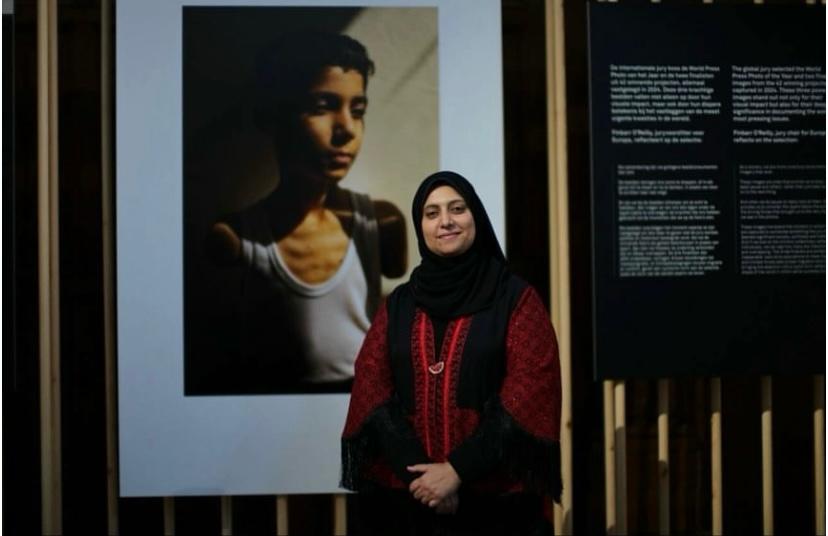
Selected from over 60,000 global submissions, it stood out for its emotional depth and raw humanity. Samar took the photo while on assignment for The New York Times.
But awards do little to quiet the ache. “This is not just an award,” she said at the World Press ceremony in Amsterdam, holding up a photo of her colleague Ehab Al-Bardini, critically wounded in an Israeli strike on a journalist tent. “My heart is still in Gaza.”
Samar has also received the 2024 Anja Niedringhaus Courage in Photojournalism Award and the George Polk Award, both for her fearless, compassionate storytelling. Her series “Out of Gaza” earned her the Olivier Rebbot Award for best photographic reporting from abroad.
The judges praised her for sensitive, wrenching portraits that revealed the almost unimaginable cost of war, especially for children. The Royal Photography Society recognised her for sustained excellence in photojournalism.
“I wish I had died in Gaza because of this feeling I carry now…”
Yet she carries all this recognition with a heavy heart. The violence she documented is her reality, not just her subject. It’s her homeland, her city and her people, family.
Now in Doha with her four children, Samar continues to photograph the wounded and displaced, to advocate for journalists still in Gaza, now the deadliest place on earth for reporters.
She gives talks, lends her voice to those still trapped, and tries to guide her children through a foreign land. But she does not feel whole. “Gaza was where I felt most free,” she says. “Now I’m safe, but not whole. I’m not in my place, not in my home. Life under bombardment was freer than this.”
Qatar gave her safety, but her days are consumed by constant worry and checking for news of her family still struggling to survive Israel’s genocidal war on the Gaza Strip.
Her mother has lost 20 kilograms, a visible toll of the hardship endured. Her sisters bake bread from pasta flour. Her nieces and nephews cry from hunger. “I die a thousand times a day. I feel helpless,” she says.
Every bite of bread she eats, every scent of cooked meat, every laugh from her children feels like a knife to her heart.
“I wish I had died in Gaza because of this feeling I carry now. I don’t know when this torment will end.”
It’s a guilt that she is safe while her family is surviving. She pauses, and then says the words she carries like a compass: “Gaza is intertwined with my heart and soul. I love her sea, her energy. She is what inspired my love for photojournalism.”
Like the rest of the world, Samar waits anxiously for news of a ceasefire between Israel and Hamas. She doesn’t know what tomorrow will bring, or when—if ever—the silence of peace will finally arrive. But wherever wounded Palestinians are evacuated, she will follow them with her camera.
If she cannot return to Gaza, she will bring Gaza to the world.
She still believes in the power of a photograph to change something, even if not today. “Pictures are supposed to convey the truth. Even if they don’t stop the war today, maybe they will tomorrow.”
Until then, Samar Abu Elouf remains Gaza’s eyes, and Gaza remains her heart.
Rephrase in a different way as if you were a native American speaker as a content creation expert and do not talk about yourself or your experience in the text and do not show yourself as an artificial intelligence who wrote and fill the bullet point in the topic and speak the heart of the topic itself and dont take date of blog in ther first and dont take text like box of newsliter subscribe on post from content and romove all linke insert in content and and remove all affiliate disclosure phrases on content like this “This post may contain Amazon or other affiliate links that allow us to earn a small commission at no extra cost to you. Please see our Disclosure Policy for more info” and “#” put in its place bullet point, and romove name of the web site or his links we are take a content from our new creation, and don’t publish clone new content more than just one time