- Europe, Spain and the logic of diversification
- The Strait of Gibraltar in the new energy architecture
- An energy corridor reshaping West Africa
- Morocco as an energy hub
- The United States and the logic of global chokepoints
The gas pipeline between Nigeria and Morocco has quickly gone from being a distant planning project to reaching a much more tangible stage. According to information reported by international media outlets such as Reuters, the intergovernmental agreement underpinning it is expected to be signed this year.
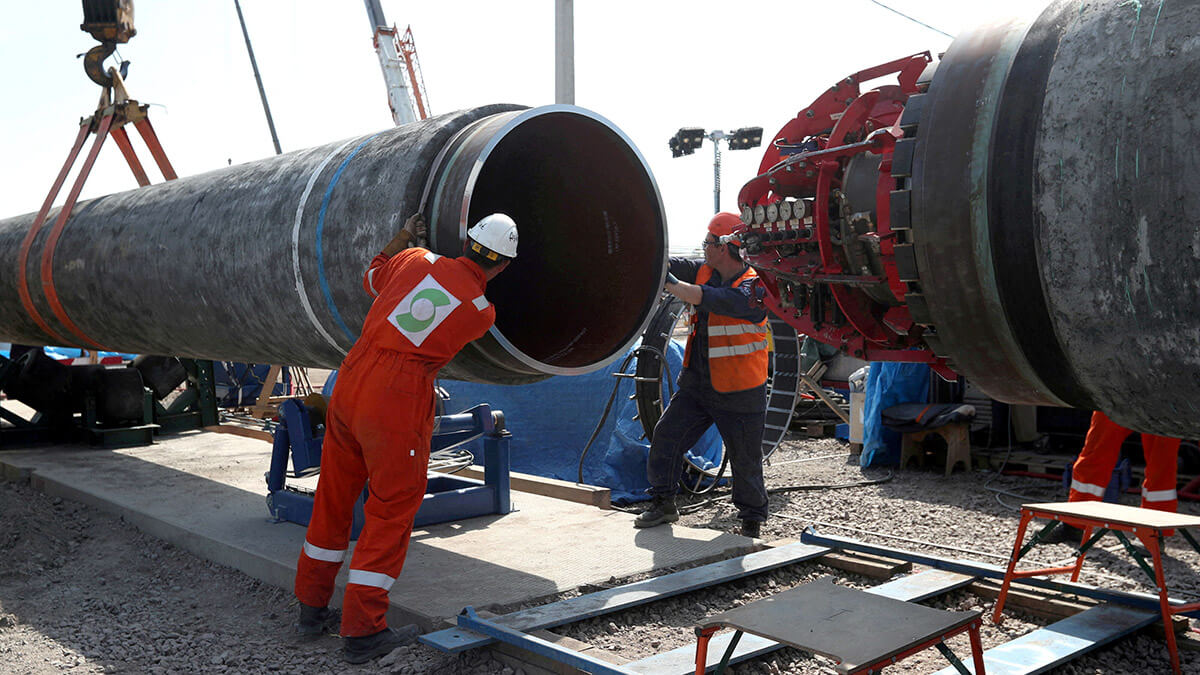
The scale is significant in itself: some $25 billion in investment and infrastructure that could stretch over 6,000 kilometres, crossing up to 13 African countries.
It is neither a closed nor a linear project. In reality, it already functions as a structure under constant negotiation which, even before it is built, is beginning to shift political and economic balances in West Africa and in its relationship with Europe.
Europe, Spain and the logic of diversification
For Europe, the project is seen as part of a broader energy diversification strategy. It does not replace current flows, but adds an additional source to a system still marked by structural tensions.
Spain occupies a unique position in this scenario. With over 30% of the European Union’s regasification capacity, it already acts as a key infrastructure hub in the south of the continent. If the corridor goes ahead, its role as a point of entry and redistribution of African gas to Europe could be significantly strengthened.
The European Commission has emphasised the need to develop “secure and diversified energy corridors in southern Europe”, a technical formulation which, in practice, integrates Spain and North Africa within the same functional framework.
The Strait of Gibraltar in the new energy architecture
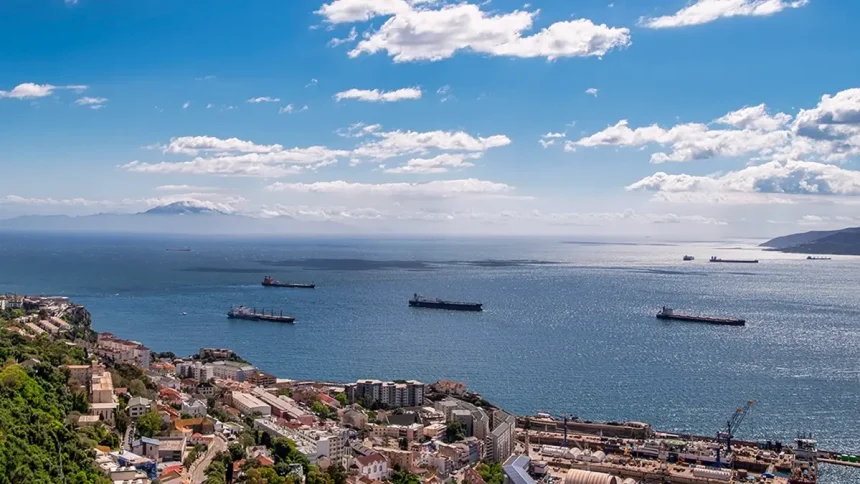
The most visible, albeit indirect, impact is projected onto the Strait of Gibraltar. Its geographical function does not change, but its relevance within the system does. If African gas becomes established as a flow to Morocco’s Atlantic coast, the Strait will become part of a broader energy chain connecting West Africa with Europe.
At this point, different interests overlap. Morocco seeks to establish itself as a regional energy hub. Spain maintains its position as the natural gateway to the European system. And the United States observes the stability of the whole from the perspective of global strategic flows.
Fitting into this same logic is something that is often mentioned separately, but which in reality forms part of the same movement: the Moroccan port network. Tanger Med Port already functions as one of the major logistics hubs of the Mediterranean and the Atlantic, with a volume of activity that has placed it on the map of Africa’s leading ports. It is not a future project, but an already established infrastructure that acts as a redistribution point between continents.
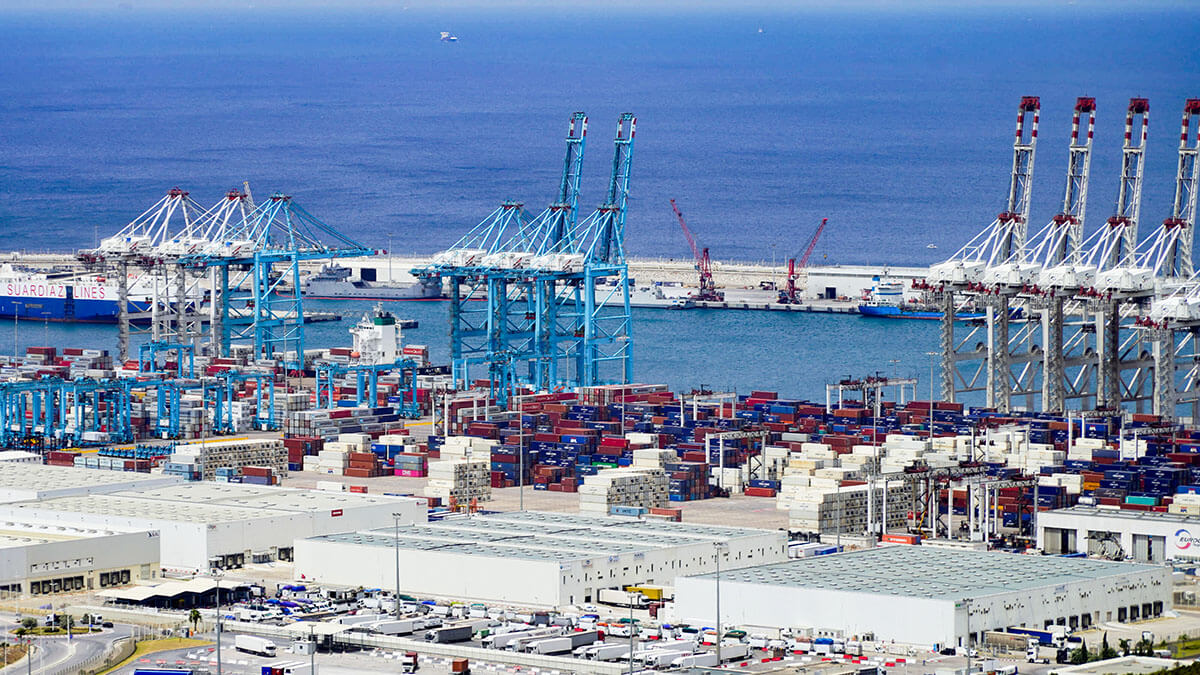
Further east, Nador West Med Port is still under development, but its design points to something more than a conventional port. It is conceived as an industrial and energy hub, designed to absorb part of the maritime traffic and strengthen Morocco’s Mediterranean coastline in parallel with the growth of the Atlantic axis.
And at the southernmost tip lies Dakhla Atlantic Port, perhaps the most strategically important for the future given its position. Its location in the Moroccan Sahara connects it directly to the gateway to West Africa and aligns with the logic of the gas pipeline itself. It is a project still under construction, but it fits with the idea of expansion southwards and the opening of new maritime routes.
Taken together, these three ports do not function as isolated entities. They paint a different picture: a parallel logistics network that reinforces Morocco’s role as a hub connecting energy, trade and maritime routes. And which, indirectly, ultimately also expands the importance of the Strait of Gibraltar within the new Atlantic axis.

Economic impact and knock-on effects
Available estimates point to significant economic effects even during the construction phase. It is estimated that tens of thousands of direct and indirect jobs will be created in West Africa, alongside associated investments exceeding 10 billion dollars in complementary infrastructure such as roads, electricity grids and port development.
For Europe, the main value lies not in the additional volume of gas, but in the reduction of supply risk. For Spain, the scenario opens up an opportunity for energy centrality, although it also increases exposure to external dynamics in North Africa and the Sahel.
An energy corridor reshaping West Africa
The logic behind the project is to connect the gas produced in Nigeria with the Atlantic coast of Morocco to open up an export route to Europe. The planned capacity is around 30 billion cubic metres per year, a figure which does not in itself replace current European supplies, but which does introduce an additional vector into a market that remains unstable following the reduction in Russian gas.
This scheme involves West African governments, ECOWAS (Economic Community of West African States), and state-owned companies such as the Nigerian National Petroleum Company (NNPC) and the Office National des Hydrocarbures et des Mines (ONHYM). In theory, it is a regional integration project. In practice, it is also a protracted negotiation over control of infrastructure, energy tolls and the ability to influence the final flow.
Morocco as an energy hub
Morocco’s role changes significantly in this context. It does not act as a gas producer, but it does aim to centralise transit, storage and part of the redistribution. This position makes it more than just a transit country.
The moroccan King Mohammed VI has on several occasions championed the idea of Morocco as an “energy bridge between Africa and Europe”. The gas pipeline fits directly into this strategy, reinforcing the idea of a country positioning itself as a structural hub in the South Atlantic.
The ONHYM has described the project as an “axis of African regional integration”. From Nigeria, the director of the NNPC, Mele Kyari, has defined it as a means to “monetise energy resources on a global scale”. Two distinct approaches that converge on the same idea: the gas pipeline is not merely infrastructure; it is a means of economic positioning.
The United States and the logic of global chokepoints
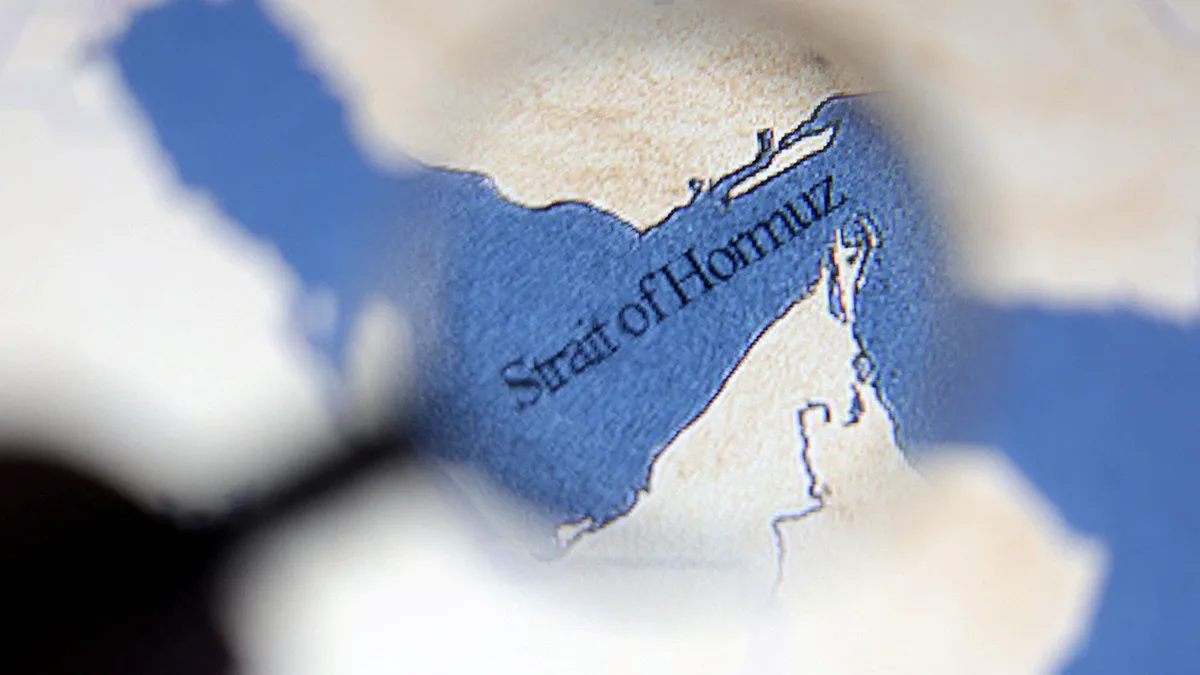
Beyond the regional level, the project fits into a broader global dynamic. For years, the United States has focused part of its strategy on so-called “chokepoints”: critical points where trade and energy flows are concentrated. Hormuz, Suez, Malacca and Panama form part of this map of strategic vulnerabilities.
The logic is not so much direct control as the ability to influence essential routes within the global system. In this sense, the Nigeria–Morocco corridor is part of a trend towards the reconfiguration of energy flows towards the Atlantic and southern Europe, with indirect implications for the international balance of power.
The Nigeria–Morocco gas pipeline is not to be understood solely as an energy project. It functions as a mechanism for the progressive reorganisation of the economic space between Africa and Europe.
Morocco gains structural centrality as an energy hub. Nigeria expands its reach as a global exporter. Europe adjusts its energy security strategy. And the United States maintains its focus on the critical corridors of the international system.
In this process, the Strait of Gibraltar ceases to be merely a geographical border. It becomes part of a broader Atlantic energy architecture, integrated into the global network of chokepoints where much of the current economic and geopolitical balance is defined.
Rephrase in a different way as if you were a native American speaker as a content creation expert and do not talk about yourself or your experience in the text and do not show yourself as an artificial intelligence who wrote and fill the bullet point in the topic and speak the heart of the topic itself and dont take date of blog in ther first and dont take text like box of newsliter subscribe on post from contentand romove all linke insert in content and and remove all affiliate disclosure phrases on content like this “This post may contain Amazon or other affiliate links that allow us to earn a small commission at no extra cost to you. Please see our Disclosure Policy for more info” and “#” put in its place bullet point, and romove name of the web site or his links we are take a content from our new creation, and don’t publish clone new content more than just one time