- Decline in profits
- Passenger numbers fall
- Gulf countries hardest hit
- Europe, also affected
- Delivery delays
Although the rise in fuel prices caused by the war in Iran is affecting virtually all sectors, it is true that air transport is one of the hardest hit.
The increase in the cost of kerosene, the fuel used in aviation, has forced flights to be rerouted and has tested airlines’ ability to raise their fares.
This was the main issue discussed over the weekend by representatives of global airlines, who met between 6 and 8 June in Rio de Janeiro (Brazil)
The annual summit of the International Air Transport Association (IATA) is the most important in the sector and brought together hundreds of senior executives from airlines, manufacturers, suppliers and financial institutions.
Decline in profits
IATA represents more than 370 airlines that account for around 85% of global air traffic, giving it a central role in a sector where profits were expected to exceed €45 billion by 2025.
Executives and analysts have significantly scaled back those forecasts at a meeting where discussions centred on rising fuel prices and supply fears; disruptions in Middle Eastern airspace; worsening delays in aircraft deliveries; and whether airlines are falling even further behind on their climate targets.
Profit forecasts have been slashed by half, with projections of $23 billion by the end of 2026. Revenue per passenger carried will also fall to $4.50, almost half the $9.10 recorded in 2025.
And this is despite the fact that the number of passengers carried will grow by 2.4%, to 5.1 billion travellers, whilst the load factor will reach a record 84%. In the words of Willie Walsh, IATA’s Director General, “disruptions linked to the war in the Middle East and rising fuel costs have worsened the outlook for airlines. Globally, profitability is expected to be halved compared to 2025.”
Faced with these challenges, airlines worldwide have already responded by raising fares, cutting unprofitable routes and conserving liquidity until the pressures ease, raising further doubts about whether they will be able to meet IATA’s target of achieving net-zero emissions by 2050, given the high cost and limited supply of sustainable aviation fuel.
Last week, Moody’s Ratings downgraded the outlook for the global aviation sector from “stable” to “negative”, stating that fuel costs linked to the Iran conflict and disruptions in the Strait of Hormuz would “substantially reduce” operating profit this year. It noted that profits could fall by more than 35% in 2026 before recovering next year.
Passenger numbers fall
IATA data revealed that global passenger traffic contracted in April for the first time since the post-pandemic recovery, driven by a sharp decline among Middle Eastern airlines.
Air India’s outgoing chief executive, Campbell Wilson, said that rising fuel prices and airspace closures were making some routes harder to justify: “When you take all those competitive dynamics into account, the added cost of these extra flights and the added cost of fuel, it simply means that some routes are no longer profitable,” he said.
Airlines with higher demand and more premium traffic have more scope to raise fares, but the ability to recoup fuel costs varies across markets and business models.
Meanwhile, Southwest Airlines CEO Bob Jordan, whose airline joined IATA last year, noted that US airlines had raised fares seven times since February without demand weakening. However, he stated that fares were still “nowhere near” covering current fuel costs.
Gulf countries hardest hit
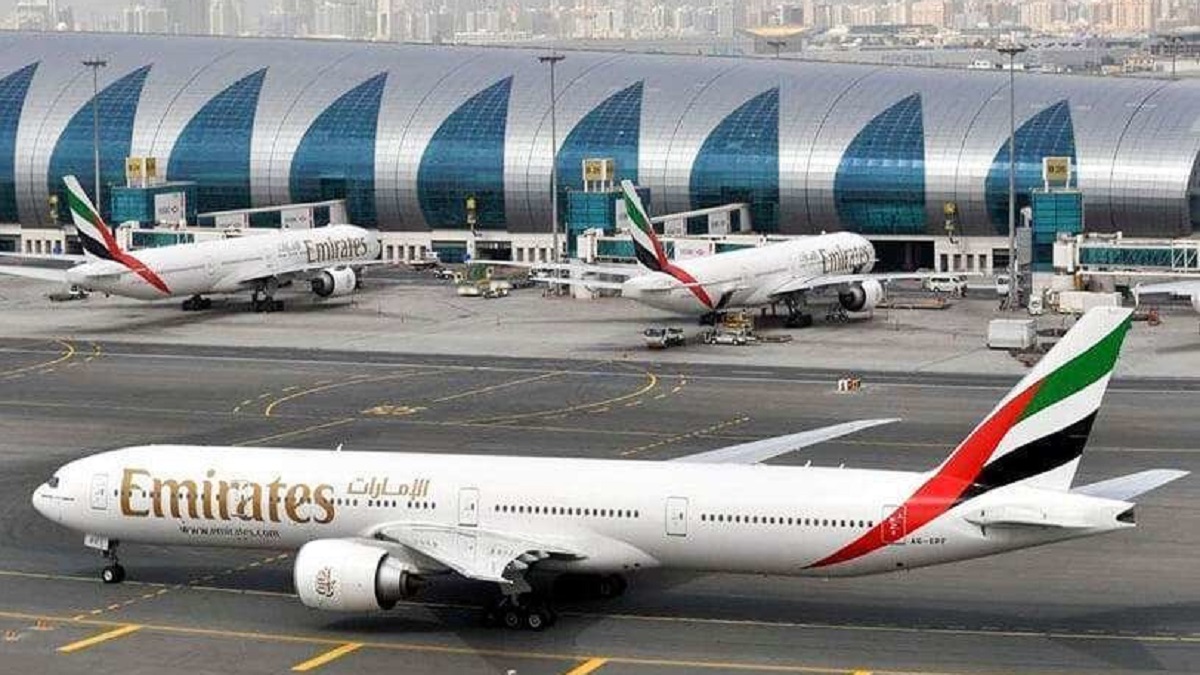
Airlines in the Gulf countries face a particular challenge. Emirates and Qatar Airways rely heavily on the hubs in Dubai and Doha, whilst Etihad Airways is expanding again from Abu Dhabi after having scaled back its previous global ambitions.
The war with Iran has not put an end to the Gulf hub model, but the detours have highlighted their dependence on accessible airspace and stable routes, which lengthens flight times and increases fuel consumption.
The disruption is also creating opportunities on some long-haul routes for airlines offering direct flights between Asia and Europe, including the Lufthansa Group, Air France-KLM, Singapore Airlines and Cathay Pacific.
Europe, also affected
Although European airlines may benefit from the Gulf carriers’ difficulties on long-haul routes by avoiding the most affected airspace, higher fuel costs are exacerbating the pressure stemming from the closure of Russian airspace, disruptions to air traffic control and the obligations to use sustainable aviation fuel.

Meanwhile, in Asia, Air India is facing higher fuel costs and longer routes, whilst IndiGo remains exposed to aircraft shortages and issues with Pratt & Whitney engines. Currency weakness is amplifying fuel costs for Japanese airlines, whilst Air New Zealand has warned of a significant impact on its profits.
In Latin America, the fuel crisis is compounded by currency fluctuations and consumers with limited scope to absorb fare increases, although limited competition gives some airlines more leeway to pass on costs. LATAM has cut its profit forecasts due to fuel costs, whilst Brazil’s Azul remains exposed to fuel prices and currency volatility.
Delivery delays
Meanwhile, delivery delays from Boeing and Airbus are forcing airlines to keep older, less fuel-efficient aircraft in service, putting further pressure on margins.
United Airlines CEO Scott Kirby said that engines and components had become the main constraint, and estimated that between 800 and 900 aircraft worldwide were grounded due to engine problems.
The fuel crisis is also fuelling rumours of industry consolidation, as airlines with tighter margins and less pricing power struggle to absorb higher costs, as highlighted by last month’s collapse of Spirit Airlines, the US pioneer of low-cost carriers.
Rephrase in a different way as if you were a native American speaker as a content creation expert and do not talk about yourself or your experience in the text and do not show yourself as an artificial intelligence who wrote and fill the bullet point in the topic and speak the heart of the topic itself and dont take date of blog in ther first and dont take text like box of newsliter subscribe on post from contentand romove all linke insert in content and and remove all affiliate disclosure phrases on content like this “This post may contain Amazon or other affiliate links that allow us to earn a small commission at no extra cost to you. Please see our Disclosure Policy for more info” and “#” put in its place bullet point, and romove name of the web site or his links we are take a content from our new creation, and don’t publish clone new content more than just one time