The Honorary Cinema Godfather Talks Photography: Khalil Nemmaoui
Essaouira, the North African port city located on Morocco’s Atlantic coast has long attracted painters, photographers, and film directors. It’s 18th-century seafront running along the northern cliffs of the Essaouira has historical ties with Portugal and has been a destination choice of directors worldwide. In the early 50s, the classic version of Orson Welles’ Othello was filmed in Essaouira. In recent years, scenes from the Game of Thrones have also been filmed here and the city’s Alizée” trade winds make it the coveted destination of water sport enthusiasts. In particular, windsurfing and kite surfing are popular. Essaouira also has many historical spots and noteworthy destinations for culture seekers and history buffs. The Hotel des Iles, built by Antoine Marchisio in 1948, is one of these gems. During the filming of Othello (1949 to 1951) Welles stayed at the Iles. Here he met Winston Churchill, also known for frequenting the hotel. In addition to the landmark destination, Essaouria also hosts music and art festivals.
Khalil Nemmaoui is a master of photographing the uncommon places.
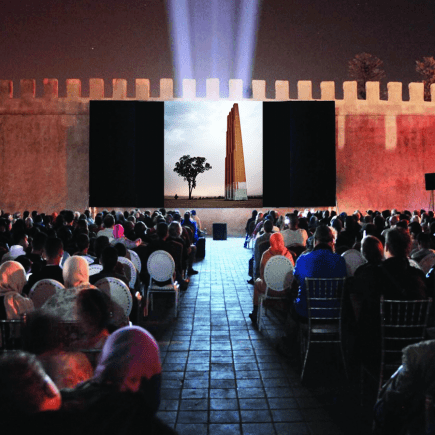
Recently, Mogador organized the Nuits Photographiques de Essaouria Festival. This year it took place for three days between October 3-6, 2019 and honored photographer “godfather” Khalil Nemmaoui. He is a master of shooting the uncommon places. The ruins and the silence felt in the pictures. He is interested in what is outside the frame and what is suggested.
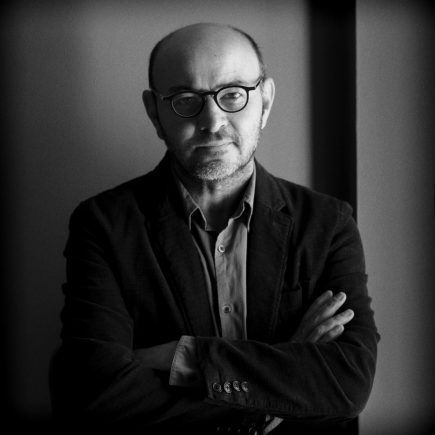
Nemmaoui was born in the small quiet town Beni Mellal near the Middle Atlas Mountains in 1967. He became fascinated with light and the process of developing photos from a young age. Growing up, he had a large fascination with both Moroccan and international cinema and literature. He grew up watching a lot of war movies and westerns; Classic westerns, in particular, inspired him. He also gravitated towards the photographers of the 70s, 80s, and 90s. Talents like Robert Frank, Stephan Shore, Larry Sultan, and many California based photographers fueled his interest in the Golden State. These California creations aligned so much with him, he sometimes says that “I could have made these photographs.” On the topic of movies, he enjoys David Lynch’s Mulholland Drive and Paris Texas ” they are my universe. I put these inspirations into my work without thinking about them.”
The connection between the Moroccan and Californian landscapes capture the essence of Nemmaoui’s work: that geography and landscape are universal. Particularly in the case of Morocco and California, they symbolize two parallel universes. “Morocco is such a diverse country. You can take a picture and it can look like it was taken from anywhere. It can be in Africa or California. In Morocco you can be in the Sahara dunes in the morning, you can ski at noon, and you can surf at sunset. There are only two places in the world where you can do this. Morocco and the other is in California, ” he says.
In his twenties, Nemmaoui got to visit California in person.
“The first time I went to California I felt like I knew it so well. It was exactly like I imagined it in my dreams. The only different thing was the idea of space. It was bigger than I imagined. Yet the colors, the smells, they were exactly the same way in my brain. Exactly like in the movies. American movies captured California well.” He compares these experiences to walking around NYC and “watching the smoke come out from under the ground. When you experience this, you cannot think of a Scorsese movie. Many moments in California felt the same.”
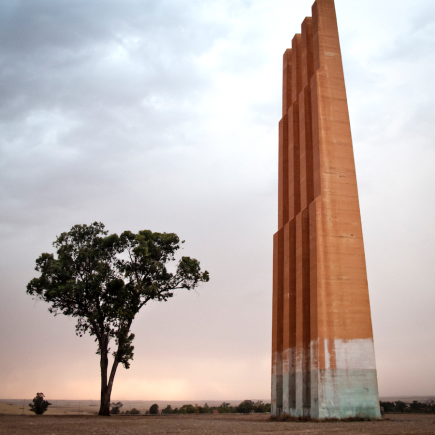
Khalil Nemmaoui’s “Maison de l’Arbre” or “The House of the Tree” Gave him a Big Break in 2009
Even though Nemmaoui loves nature and focuses his time on landscape photography today- his “Maison de l’Arbre” or “The House of the Tree” series is what gave him his big break in 2009, he says he feels like he started his “real career” late. From the early 90s, “I was working as a photographer but in advertising, press, and commission work that I choose; but it wasn’t my passion.” In 1996, he exhibited work at the French Institute of Casablanca’s “ Casablanca Fragments of Imagination.” Two years later he also published his “La Revue Noire” portfolio which was circulated in different exhibitions and galleries.
It wasn’t until he went back to his roots however, to a farming village in Beni Mellal, that things in his career really shifted. “ I used to hate going back to Beni Mellal. It’s a city that felt boring, like the mid-west. Nothing happens there. This time when I got there, I saw a tree in front of my parent’s house. I took a picture and drove back to Casablanca. The next morning after developing the picture, I returned to the tree.
The photo mesmerized him so much that he ended up staying for two months in Beni Mellal. I took photos of all the trees adjacent to all the houses. “Every house that had a tree next to it, I took a photo. This became my therapy. Suddenly neighbors started calling me to say there was a tree next to a house and that I needed to photograph. It showed me that people could see things from my perspective. This felt incredibly gratifying. After this experience, coming to Beni Mellal felt amazing. Now I love to go to my city.”
N’semmaoui carthatic “tree” series was featured at the Biennale Photoquai at the Quai Branly Museum and the Carrousel du Louvre for “Paris Photo”
The carthatic “tree” series was featured at the Biennale Photoquai at the Quai Branly Museum. It also appeared at the Carrousel du Louvre for “Paris Photo”. From this point, his work began to exhibit at prestigious festivals in Europe and the United States. Maison de l’Arbre also won the Francophonie prize Bamako international photography meetings (2011) and was nominated for the Prix Pictet. Nemmaoui also participated in several art residences, including one in Paris (2010) and in San Francisco (2014). His work can also be found in several collections like those of the Mohamed VI Museum for Modern Art, the Institute of the Arab World, The CDG Foundation, and The Attijari Wafabank Foundation.
In his interview on the closing day of the Essaouria Nuits Photographiques, held in the sophisticated Sofitel Hotel, Nemmaoui sat down with Morocco Travel Blog. He shared his thoughts on what it takes to create a good photograph.
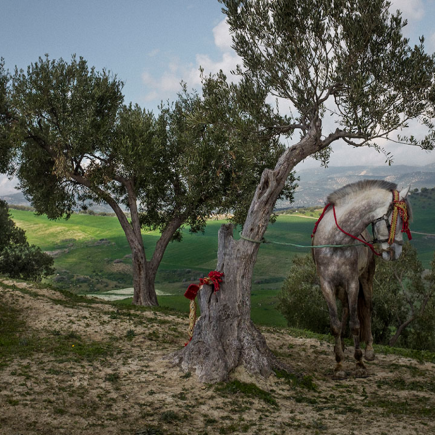
What advice can you give new photographers who want to capture a feeling in a picture?
“When I shoot I don’t close my eyes. I want to see what is outside of the frame. This helps me to compose my pictures and be a better storyteller.
A photograph is something that comes from inside and helps you to express something.
It’s mystical, a kind of meditation. For example, it is difficult for me to photograph Essaouria without falling into a cliche. All the blue, all the people, the birds. We had all this information in the 90s. If I go to Paris as a tourist for the first time and photograph the Eiffel Tower, this is a pure cliche this is not a photograph. I don’t know when a photograph is good or not. I know it when I get back home after I develop it.
Do you develop most of your photographs?
For the past 10 years, I try to make only an analog photo. The black room helps me to express something. The process is in accordance with my way of photographing. It feels mystical to me, like a meditation. The light inspires me to be alone in silence.
Digital doesn’t permit this because it is too fast. You do shoot 100 photographs that don’t mean anything. With analog photography, you have to take your time to compose, to shift, wait for the light, then click. You can pass a day to take just 1 or 2 pictures.
When do you feel most proud of your work?
At the vernissage at the Photo Nuits, I saw a girl crying. I felt so good because I knew there was something about the photo that touched her. I came up to her after and I asked, why are you crying? She couldn’t define it. I understood this. Even me, I don’t know what touches me. The day I will know, I think it will change how I photograph things. I like to drive and pass by something and I’ll turn around. Then I will ask myself, why did I stop.
What do you love most about photography?
It can help people learn to look at things from a unique perspective. This is why photography is powerful. Sometimes you can watch a documentary and forget it in two days after. A photograph is different. It stays in the brain. After this experience, coming to Beni Mellal felt amazing. Now I love to go to my city.”
What is your message to photographers?
Be aware of the cliche in photography. The cliche is avoiding the mainstream and trying to make a picture beautiful to everyone. A lot of photographers think they need to travel to Japan or Tibet to take a good photo, but a great photograph can be taken just by opening the door of your house. Also, focus on being sincere. If you want to say something, say it. Do things for yourself. Maybe people will not understand it for a few years, but eventually, it will connect with someone.
What Moroccan writers inspire your work?
Driss Chraïbi, Abdellatif Laâbi, Fouad Bellamine among many others.
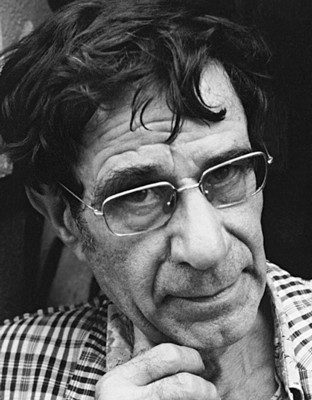
Driss Chraibi, a Moroccan author from El Jadida Known for his Colonial Novels
A Moroccan author from El Jadida. His novels dealt with colonialism, the treatment of Muslim women, cultural misunderstandings, and generational conflicts. He was considered one of the world’s most important North African authors. Upon his death at age 80, fellow Moroccan writer Laila Lalami said, “He was the first writer I read as a child who created Moroccan characters that were believable, he was a national treasure.”
Abdellatif Laabi, a Fassi Poet and the Founder of Souffles Art Journal and Literary Review
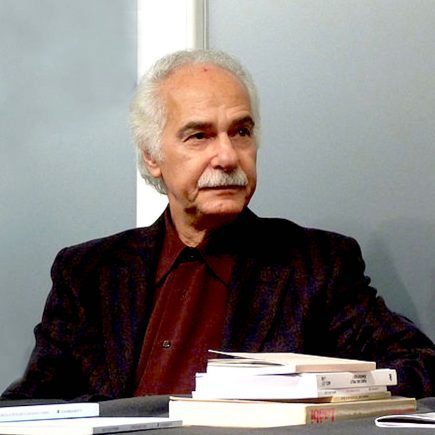
Born in Fes in 1942 and become well known for his poetry. He was the founder of the Souffles, an art journal and literary review in 1966. The magazine was considered an intellectual hub for filmmakers, painters, intellectuals, and thinkers. It also created an intercultural dialogue with other writers from North Africa. The magazine was banned in 1972. Around this time, Laâbi was imprisoned, tortured and sentenced to ten years in prison for his political beliefs and his writings. He was forced into exile in France (1985).
Fouad Bellamine, a Fassi Moroccan Painter and Professional of Visual Arts in Rabat
A Fes born, Moroccan painter who lives between Morocco and France. Since 1973, he has been a professor of visual arts in Rabat. His work supports a thesis in visual arts on murals in the context of contemporary paintings. Bellamine also paints around the subject of Moroccan identity. In 1954, he moved to Tangier to work on his Naked Lunch piece. There he became inspired by Beat Generation novelist Jack Kerouac who arrived in Tangier in 1957 to help William Burroughs with his manuscript.
Rephrase in a different way as if you were a native American speaker as a content creation expert and do not talk about yourself or your experience in the text and do not show yourself as an artificial intelligence who wrote and fill the bullet point in the topic and speak the heart of the topic itself and dont take date of blog in ther first and dont take text like box of newsliter subscribe on post from
The Honorary Cinema Godfather Talks Photography: Khalil Nemmaoui
Essaouira, the North African port city located on Morocco’s Atlantic coast has long attracted painters, photographers, and film directors. It’s 18th-century seafront running along the northern cliffs of the Essaouira has historical ties with Portugal and has been a destination choice of directors worldwide. In the early 50s, the classic version of Orson Welles’ Othello was filmed in Essaouira. In recent years, scenes from the Game of Thrones have also been filmed here and the city’s Alizée” trade winds make it the coveted destination of water sport enthusiasts. In particular, windsurfing and kite surfing are popular. Essaouira also has many historical spots and noteworthy destinations for culture seekers and history buffs. The Hotel des Iles, built by Antoine Marchisio in 1948, is one of these gems. During the filming of Othello (1949 to 1951) Welles stayed at the Iles. Here he met Winston Churchill, also known for frequenting the hotel. In addition to the landmark destination, Essaouria also hosts music and art festivals.
Khalil Nemmaoui is a master of photographing the uncommon places.
Recently, Mogador organized the Nuits Photographiques de Essaouria Festival. This year it took place for three days between October 3-6, 2019 and honored photographer “godfather” Khalil Nemmaoui. He is a master of shooting the uncommon places. The ruins and the silence felt in the pictures. He is interested in what is outside the frame and what is suggested.
Nemmaoui was born in the small quiet town Beni Mellal near the Middle Atlas Mountains in 1967. He became fascinated with light and the process of developing photos from a young age. Growing up, he had a large fascination with both Moroccan and international cinema and literature. He grew up watching a lot of war movies and westerns; Classic westerns, in particular, inspired him. He also gravitated towards the photographers of the 70s, 80s, and 90s. Talents like Robert Frank, Stephan Shore, Larry Sultan, and many California based photographers fueled his interest in the Golden State. These California creations aligned so much with him, he sometimes says that “I could have made these photographs.” On the topic of movies, he enjoys David Lynch’s Mulholland Drive and Paris Texas ” they are my universe. I put these inspirations into my work without thinking about them.”
The connection between the Moroccan and Californian landscapes capture the essence of Nemmaoui’s work: that geography and landscape are universal. Particularly in the case of Morocco and California, they symbolize two parallel universes. “Morocco is such a diverse country. You can take a picture and it can look like it was taken from anywhere. It can be in Africa or California. In Morocco you can be in the Sahara dunes in the morning, you can ski at noon, and you can surf at sunset. There are only two places in the world where you can do this. Morocco and the other is in California, ” he says.
In his twenties, Nemmaoui got to visit California in person.
“The first time I went to California I felt like I knew it so well. It was exactly like I imagined it in my dreams. The only different thing was the idea of space. It was bigger than I imagined. Yet the colors, the smells, they were exactly the same way in my brain. Exactly like in the movies. American movies captured California well.” He compares these experiences to walking around NYC and “watching the smoke come out from under the ground. When you experience this, you cannot think of a Scorsese movie. Many moments in California felt the same.”
Khalil Nemmaoui’s “Maison de l’Arbre” or “The House of the Tree” Gave him a Big Break in 2009
Even though Nemmaoui loves nature and focuses his time on landscape photography today- his “Maison de l’Arbre” or “The House of the Tree” series is what gave him his big break in 2009, he says he feels like he started his “real career” late. From the early 90s, “I was working as a photographer but in advertising, press, and commission work that I choose; but it wasn’t my passion.” In 1996, he exhibited work at the French Institute of Casablanca’s “ Casablanca Fragments of Imagination.” Two years later he also published his “La Revue Noire” portfolio which was circulated in different exhibitions and galleries.
It wasn’t until he went back to his roots however, to a farming village in Beni Mellal, that things in his career really shifted. “ I used to hate going back to Beni Mellal. It’s a city that felt boring, like the mid-west. Nothing happens there. This time when I got there, I saw a tree in front of my parent’s house. I took a picture and drove back to Casablanca. The next morning after developing the picture, I returned to the tree.
The photo mesmerized him so much that he ended up staying for two months in Beni Mellal. I took photos of all the trees adjacent to all the houses. “Every house that had a tree next to it, I took a photo. This became my therapy. Suddenly neighbors started calling me to say there was a tree next to a house and that I needed to photograph. It showed me that people could see things from my perspective. This felt incredibly gratifying. After this experience, coming to Beni Mellal felt amazing. Now I love to go to my city.”
N’semmaoui carthatic “tree” series was featured at the Biennale Photoquai at the Quai Branly Museum and the Carrousel du Louvre for “Paris Photo”
The carthatic “tree” series was featured at the Biennale Photoquai at the Quai Branly Museum. It also appeared at the Carrousel du Louvre for “Paris Photo”. From this point, his work began to exhibit at prestigious festivals in Europe and the United States. Maison de l’Arbre also won the Francophonie prize Bamako international photography meetings (2011) and was nominated for the Prix Pictet. Nemmaoui also participated in several art residences, including one in Paris (2010) and in San Francisco (2014). His work can also be found in several collections like those of the Mohamed VI Museum for Modern Art, the Institute of the Arab World, The CDG Foundation, and The Attijari Wafabank Foundation.
In his interview on the closing day of the Essaouria Nuits Photographiques, held in the sophisticated Sofitel Hotel, Nemmaoui sat down with Morocco Travel Blog. He shared his thoughts on what it takes to create a good photograph.
What advice can you give new photographers who want to capture a feeling in a picture?
“When I shoot I don’t close my eyes. I want to see what is outside of the frame. This helps me to compose my pictures and be a better storyteller.
A photograph is something that comes from inside and helps you to express something.
It’s mystical, a kind of meditation. For example, it is difficult for me to photograph Essaouria without falling into a cliche. All the blue, all the people, the birds. We had all this information in the 90s. If I go to Paris as a tourist for the first time and photograph the Eiffel Tower, this is a pure cliche this is not a photograph. I don’t know when a photograph is good or not. I know it when I get back home after I develop it.
Do you develop most of your photographs?
For the past 10 years, I try to make only an analog photo. The black room helps me to express something. The process is in accordance with my way of photographing. It feels mystical to me, like a meditation. The light inspires me to be alone in silence.
Digital doesn’t permit this because it is too fast. You do shoot 100 photographs that don’t mean anything. With analog photography, you have to take your time to compose, to shift, wait for the light, then click. You can pass a day to take just 1 or 2 pictures.
When do you feel most proud of your work?
At the vernissage at the Photo Nuits, I saw a girl crying. I felt so good because I knew there was something about the photo that touched her. I came up to her after and I asked, why are you crying? She couldn’t define it. I understood this. Even me, I don’t know what touches me. The day I will know, I think it will change how I photograph things. I like to drive and pass by something and I’ll turn around. Then I will ask myself, why did I stop.
What do you love most about photography?
It can help people learn to look at things from a unique perspective. This is why photography is powerful. Sometimes you can watch a documentary and forget it in two days after. A photograph is different. It stays in the brain. After this experience, coming to Beni Mellal felt amazing. Now I love to go to my city.”
What is your message to photographers?
Be aware of the cliche in photography. The cliche is avoiding the mainstream and trying to make a picture beautiful to everyone. A lot of photographers think they need to travel to Japan or Tibet to take a good photo, but a great photograph can be taken just by opening the door of your house. Also, focus on being sincere. If you want to say something, say it. Do things for yourself. Maybe people will not understand it for a few years, but eventually, it will connect with someone.
What Moroccan writers inspire your work?
Driss Chraïbi, Abdellatif Laâbi, Fouad Bellamine among many others.
Driss Chraibi, a Moroccan author from El Jadida Known for his Colonial Novels
A Moroccan author from El Jadida. His novels dealt with colonialism, the treatment of Muslim women, cultural misunderstandings, and generational conflicts. He was considered one of the world’s most important North African authors. Upon his death at age 80, fellow Moroccan writer Laila Lalami said, “He was the first writer I read as a child who created Moroccan characters that were believable, he was a national treasure.”
Abdellatif Laabi, a Fassi Poet and the Founder of Souffles Art Journal and Literary Review
Born in Fes in 1942 and become well known for his poetry. He was the founder of the Souffles, an art journal and literary review in 1966. The magazine was considered an intellectual hub for filmmakers, painters, intellectuals, and thinkers. It also created an intercultural dialogue with other writers from North Africa. The magazine was banned in 1972. Around this time, Laâbi was imprisoned, tortured and sentenced to ten years in prison for his political beliefs and his writings. He was forced into exile in France (1985).
Fouad Bellamine, a Fassi Moroccan Painter and Professional of Visual Arts in Rabat
A Fes born, Moroccan painter who lives between Morocco and France. Since 1973, he has been a professor of visual arts in Rabat. His work supports a thesis in visual arts on murals in the context of contemporary paintings. Bellamine also paints around the subject of Moroccan identity. In 1954, he moved to Tangier to work on his Naked Lunch piece. There he became inspired by Beat Generation novelist Jack Kerouac who arrived in Tangier in 1957 to help William Burroughs with his manuscript.
and romove all linke insert in
The Honorary Cinema Godfather Talks Photography: Khalil Nemmaoui
Essaouira, the North African port city located on Morocco’s Atlantic coast has long attracted painters, photographers, and film directors. It’s 18th-century seafront running along the northern cliffs of the Essaouira has historical ties with Portugal and has been a destination choice of directors worldwide. In the early 50s, the classic version of Orson Welles’ Othello was filmed in Essaouira. In recent years, scenes from the Game of Thrones have also been filmed here and the city’s Alizée” trade winds make it the coveted destination of water sport enthusiasts. In particular, windsurfing and kite surfing are popular. Essaouira also has many historical spots and noteworthy destinations for culture seekers and history buffs. The Hotel des Iles, built by Antoine Marchisio in 1948, is one of these gems. During the filming of Othello (1949 to 1951) Welles stayed at the Iles. Here he met Winston Churchill, also known for frequenting the hotel. In addition to the landmark destination, Essaouria also hosts music and art festivals.
Khalil Nemmaoui is a master of photographing the uncommon places.
Recently, Mogador organized the Nuits Photographiques de Essaouria Festival. This year it took place for three days between October 3-6, 2019 and honored photographer “godfather” Khalil Nemmaoui. He is a master of shooting the uncommon places. The ruins and the silence felt in the pictures. He is interested in what is outside the frame and what is suggested.
Nemmaoui was born in the small quiet town Beni Mellal near the Middle Atlas Mountains in 1967. He became fascinated with light and the process of developing photos from a young age. Growing up, he had a large fascination with both Moroccan and international cinema and literature. He grew up watching a lot of war movies and westerns; Classic westerns, in particular, inspired him. He also gravitated towards the photographers of the 70s, 80s, and 90s. Talents like Robert Frank, Stephan Shore, Larry Sultan, and many California based photographers fueled his interest in the Golden State. These California creations aligned so much with him, he sometimes says that “I could have made these photographs.” On the topic of movies, he enjoys David Lynch’s Mulholland Drive and Paris Texas ” they are my universe. I put these inspirations into my work without thinking about them.”
The connection between the Moroccan and Californian landscapes capture the essence of Nemmaoui’s work: that geography and landscape are universal. Particularly in the case of Morocco and California, they symbolize two parallel universes. “Morocco is such a diverse country. You can take a picture and it can look like it was taken from anywhere. It can be in Africa or California. In Morocco you can be in the Sahara dunes in the morning, you can ski at noon, and you can surf at sunset. There are only two places in the world where you can do this. Morocco and the other is in California, ” he says.
In his twenties, Nemmaoui got to visit California in person.
“The first time I went to California I felt like I knew it so well. It was exactly like I imagined it in my dreams. The only different thing was the idea of space. It was bigger than I imagined. Yet the colors, the smells, they were exactly the same way in my brain. Exactly like in the movies. American movies captured California well.” He compares these experiences to walking around NYC and “watching the smoke come out from under the ground. When you experience this, you cannot think of a Scorsese movie. Many moments in California felt the same.”
Khalil Nemmaoui’s “Maison de l’Arbre” or “The House of the Tree” Gave him a Big Break in 2009
Even though Nemmaoui loves nature and focuses his time on landscape photography today- his “Maison de l’Arbre” or “The House of the Tree” series is what gave him his big break in 2009, he says he feels like he started his “real career” late. From the early 90s, “I was working as a photographer but in advertising, press, and commission work that I choose; but it wasn’t my passion.” In 1996, he exhibited work at the French Institute of Casablanca’s “ Casablanca Fragments of Imagination.” Two years later he also published his “La Revue Noire” portfolio which was circulated in different exhibitions and galleries.
It wasn’t until he went back to his roots however, to a farming village in Beni Mellal, that things in his career really shifted. “ I used to hate going back to Beni Mellal. It’s a city that felt boring, like the mid-west. Nothing happens there. This time when I got there, I saw a tree in front of my parent’s house. I took a picture and drove back to Casablanca. The next morning after developing the picture, I returned to the tree.
The photo mesmerized him so much that he ended up staying for two months in Beni Mellal. I took photos of all the trees adjacent to all the houses. “Every house that had a tree next to it, I took a photo. This became my therapy. Suddenly neighbors started calling me to say there was a tree next to a house and that I needed to photograph. It showed me that people could see things from my perspective. This felt incredibly gratifying. After this experience, coming to Beni Mellal felt amazing. Now I love to go to my city.”
N’semmaoui carthatic “tree” series was featured at the Biennale Photoquai at the Quai Branly Museum and the Carrousel du Louvre for “Paris Photo”
The carthatic “tree” series was featured at the Biennale Photoquai at the Quai Branly Museum. It also appeared at the Carrousel du Louvre for “Paris Photo”. From this point, his work began to exhibit at prestigious festivals in Europe and the United States. Maison de l’Arbre also won the Francophonie prize Bamako international photography meetings (2011) and was nominated for the Prix Pictet. Nemmaoui also participated in several art residences, including one in Paris (2010) and in San Francisco (2014). His work can also be found in several collections like those of the Mohamed VI Museum for Modern Art, the Institute of the Arab World, The CDG Foundation, and The Attijari Wafabank Foundation.
In his interview on the closing day of the Essaouria Nuits Photographiques, held in the sophisticated Sofitel Hotel, Nemmaoui sat down with Morocco Travel Blog. He shared his thoughts on what it takes to create a good photograph.
What advice can you give new photographers who want to capture a feeling in a picture?
“When I shoot I don’t close my eyes. I want to see what is outside of the frame. This helps me to compose my pictures and be a better storyteller.
A photograph is something that comes from inside and helps you to express something.
It’s mystical, a kind of meditation. For example, it is difficult for me to photograph Essaouria without falling into a cliche. All the blue, all the people, the birds. We had all this information in the 90s. If I go to Paris as a tourist for the first time and photograph the Eiffel Tower, this is a pure cliche this is not a photograph. I don’t know when a photograph is good or not. I know it when I get back home after I develop it.
Do you develop most of your photographs?
For the past 10 years, I try to make only an analog photo. The black room helps me to express something. The process is in accordance with my way of photographing. It feels mystical to me, like a meditation. The light inspires me to be alone in silence.
Digital doesn’t permit this because it is too fast. You do shoot 100 photographs that don’t mean anything. With analog photography, you have to take your time to compose, to shift, wait for the light, then click. You can pass a day to take just 1 or 2 pictures.
When do you feel most proud of your work?
At the vernissage at the Photo Nuits, I saw a girl crying. I felt so good because I knew there was something about the photo that touched her. I came up to her after and I asked, why are you crying? She couldn’t define it. I understood this. Even me, I don’t know what touches me. The day I will know, I think it will change how I photograph things. I like to drive and pass by something and I’ll turn around. Then I will ask myself, why did I stop.
What do you love most about photography?
It can help people learn to look at things from a unique perspective. This is why photography is powerful. Sometimes you can watch a documentary and forget it in two days after. A photograph is different. It stays in the brain. After this experience, coming to Beni Mellal felt amazing. Now I love to go to my city.”
What is your message to photographers?
Be aware of the cliche in photography. The cliche is avoiding the mainstream and trying to make a picture beautiful to everyone. A lot of photographers think they need to travel to Japan or Tibet to take a good photo, but a great photograph can be taken just by opening the door of your house. Also, focus on being sincere. If you want to say something, say it. Do things for yourself. Maybe people will not understand it for a few years, but eventually, it will connect with someone.
What Moroccan writers inspire your work?
Driss Chraïbi, Abdellatif Laâbi, Fouad Bellamine among many others.
Driss Chraibi, a Moroccan author from El Jadida Known for his Colonial Novels
A Moroccan author from El Jadida. His novels dealt with colonialism, the treatment of Muslim women, cultural misunderstandings, and generational conflicts. He was considered one of the world’s most important North African authors. Upon his death at age 80, fellow Moroccan writer Laila Lalami said, “He was the first writer I read as a child who created Moroccan characters that were believable, he was a national treasure.”
Abdellatif Laabi, a Fassi Poet and the Founder of Souffles Art Journal and Literary Review
Born in Fes in 1942 and become well known for his poetry. He was the founder of the Souffles, an art journal and literary review in 1966. The magazine was considered an intellectual hub for filmmakers, painters, intellectuals, and thinkers. It also created an intercultural dialogue with other writers from North Africa. The magazine was banned in 1972. Around this time, Laâbi was imprisoned, tortured and sentenced to ten years in prison for his political beliefs and his writings. He was forced into exile in France (1985).
Fouad Bellamine, a Fassi Moroccan Painter and Professional of Visual Arts in Rabat
A Fes born, Moroccan painter who lives between Morocco and France. Since 1973, he has been a professor of visual arts in Rabat. His work supports a thesis in visual arts on murals in the context of contemporary paintings. Bellamine also paints around the subject of Moroccan identity. In 1954, he moved to Tangier to work on his Naked Lunch piece. There he became inspired by Beat Generation novelist Jack Kerouac who arrived in Tangier in 1957 to help William Burroughs with his manuscript.
and and remove all affiliate disclosure phrases on
The Honorary Cinema Godfather Talks Photography: Khalil Nemmaoui
Essaouira, the North African port city located on Morocco’s Atlantic coast has long attracted painters, photographers, and film directors. It’s 18th-century seafront running along the northern cliffs of the Essaouira has historical ties with Portugal and has been a destination choice of directors worldwide. In the early 50s, the classic version of Orson Welles’ Othello was filmed in Essaouira. In recent years, scenes from the Game of Thrones have also been filmed here and the city’s Alizée” trade winds make it the coveted destination of water sport enthusiasts. In particular, windsurfing and kite surfing are popular. Essaouira also has many historical spots and noteworthy destinations for culture seekers and history buffs. The Hotel des Iles, built by Antoine Marchisio in 1948, is one of these gems. During the filming of Othello (1949 to 1951) Welles stayed at the Iles. Here he met Winston Churchill, also known for frequenting the hotel. In addition to the landmark destination, Essaouria also hosts music and art festivals.
Khalil Nemmaoui is a master of photographing the uncommon places.
Recently, Mogador organized the Nuits Photographiques de Essaouria Festival. This year it took place for three days between October 3-6, 2019 and honored photographer “godfather” Khalil Nemmaoui. He is a master of shooting the uncommon places. The ruins and the silence felt in the pictures. He is interested in what is outside the frame and what is suggested.
Nemmaoui was born in the small quiet town Beni Mellal near the Middle Atlas Mountains in 1967. He became fascinated with light and the process of developing photos from a young age. Growing up, he had a large fascination with both Moroccan and international cinema and literature. He grew up watching a lot of war movies and westerns; Classic westerns, in particular, inspired him. He also gravitated towards the photographers of the 70s, 80s, and 90s. Talents like Robert Frank, Stephan Shore, Larry Sultan, and many California based photographers fueled his interest in the Golden State. These California creations aligned so much with him, he sometimes says that “I could have made these photographs.” On the topic of movies, he enjoys David Lynch’s Mulholland Drive and Paris Texas ” they are my universe. I put these inspirations into my work without thinking about them.”
The connection between the Moroccan and Californian landscapes capture the essence of Nemmaoui’s work: that geography and landscape are universal. Particularly in the case of Morocco and California, they symbolize two parallel universes. “Morocco is such a diverse country. You can take a picture and it can look like it was taken from anywhere. It can be in Africa or California. In Morocco you can be in the Sahara dunes in the morning, you can ski at noon, and you can surf at sunset. There are only two places in the world where you can do this. Morocco and the other is in California, ” he says.
In his twenties, Nemmaoui got to visit California in person.
“The first time I went to California I felt like I knew it so well. It was exactly like I imagined it in my dreams. The only different thing was the idea of space. It was bigger than I imagined. Yet the colors, the smells, they were exactly the same way in my brain. Exactly like in the movies. American movies captured California well.” He compares these experiences to walking around NYC and “watching the smoke come out from under the ground. When you experience this, you cannot think of a Scorsese movie. Many moments in California felt the same.”
Khalil Nemmaoui’s “Maison de l’Arbre” or “The House of the Tree” Gave him a Big Break in 2009
Even though Nemmaoui loves nature and focuses his time on landscape photography today- his “Maison de l’Arbre” or “The House of the Tree” series is what gave him his big break in 2009, he says he feels like he started his “real career” late. From the early 90s, “I was working as a photographer but in advertising, press, and commission work that I choose; but it wasn’t my passion.” In 1996, he exhibited work at the French Institute of Casablanca’s “ Casablanca Fragments of Imagination.” Two years later he also published his “La Revue Noire” portfolio which was circulated in different exhibitions and galleries.
It wasn’t until he went back to his roots however, to a farming village in Beni Mellal, that things in his career really shifted. “ I used to hate going back to Beni Mellal. It’s a city that felt boring, like the mid-west. Nothing happens there. This time when I got there, I saw a tree in front of my parent’s house. I took a picture and drove back to Casablanca. The next morning after developing the picture, I returned to the tree.
The photo mesmerized him so much that he ended up staying for two months in Beni Mellal. I took photos of all the trees adjacent to all the houses. “Every house that had a tree next to it, I took a photo. This became my therapy. Suddenly neighbors started calling me to say there was a tree next to a house and that I needed to photograph. It showed me that people could see things from my perspective. This felt incredibly gratifying. After this experience, coming to Beni Mellal felt amazing. Now I love to go to my city.”
N’semmaoui carthatic “tree” series was featured at the Biennale Photoquai at the Quai Branly Museum and the Carrousel du Louvre for “Paris Photo”
The carthatic “tree” series was featured at the Biennale Photoquai at the Quai Branly Museum. It also appeared at the Carrousel du Louvre for “Paris Photo”. From this point, his work began to exhibit at prestigious festivals in Europe and the United States. Maison de l’Arbre also won the Francophonie prize Bamako international photography meetings (2011) and was nominated for the Prix Pictet. Nemmaoui also participated in several art residences, including one in Paris (2010) and in San Francisco (2014). His work can also be found in several collections like those of the Mohamed VI Museum for Modern Art, the Institute of the Arab World, The CDG Foundation, and The Attijari Wafabank Foundation.
In his interview on the closing day of the Essaouria Nuits Photographiques, held in the sophisticated Sofitel Hotel, Nemmaoui sat down with Morocco Travel Blog. He shared his thoughts on what it takes to create a good photograph.
What advice can you give new photographers who want to capture a feeling in a picture?
“When I shoot I don’t close my eyes. I want to see what is outside of the frame. This helps me to compose my pictures and be a better storyteller.
A photograph is something that comes from inside and helps you to express something.
It’s mystical, a kind of meditation. For example, it is difficult for me to photograph Essaouria without falling into a cliche. All the blue, all the people, the birds. We had all this information in the 90s. If I go to Paris as a tourist for the first time and photograph the Eiffel Tower, this is a pure cliche this is not a photograph. I don’t know when a photograph is good or not. I know it when I get back home after I develop it.
Do you develop most of your photographs?
For the past 10 years, I try to make only an analog photo. The black room helps me to express something. The process is in accordance with my way of photographing. It feels mystical to me, like a meditation. The light inspires me to be alone in silence.
Digital doesn’t permit this because it is too fast. You do shoot 100 photographs that don’t mean anything. With analog photography, you have to take your time to compose, to shift, wait for the light, then click. You can pass a day to take just 1 or 2 pictures.
When do you feel most proud of your work?
At the vernissage at the Photo Nuits, I saw a girl crying. I felt so good because I knew there was something about the photo that touched her. I came up to her after and I asked, why are you crying? She couldn’t define it. I understood this. Even me, I don’t know what touches me. The day I will know, I think it will change how I photograph things. I like to drive and pass by something and I’ll turn around. Then I will ask myself, why did I stop.
What do you love most about photography?
It can help people learn to look at things from a unique perspective. This is why photography is powerful. Sometimes you can watch a documentary and forget it in two days after. A photograph is different. It stays in the brain. After this experience, coming to Beni Mellal felt amazing. Now I love to go to my city.”
What is your message to photographers?
Be aware of the cliche in photography. The cliche is avoiding the mainstream and trying to make a picture beautiful to everyone. A lot of photographers think they need to travel to Japan or Tibet to take a good photo, but a great photograph can be taken just by opening the door of your house. Also, focus on being sincere. If you want to say something, say it. Do things for yourself. Maybe people will not understand it for a few years, but eventually, it will connect with someone.
What Moroccan writers inspire your work?
Driss Chraïbi, Abdellatif Laâbi, Fouad Bellamine among many others.
Driss Chraibi, a Moroccan author from El Jadida Known for his Colonial Novels
A Moroccan author from El Jadida. His novels dealt with colonialism, the treatment of Muslim women, cultural misunderstandings, and generational conflicts. He was considered one of the world’s most important North African authors. Upon his death at age 80, fellow Moroccan writer Laila Lalami said, “He was the first writer I read as a child who created Moroccan characters that were believable, he was a national treasure.”
Abdellatif Laabi, a Fassi Poet and the Founder of Souffles Art Journal and Literary Review
Born in Fes in 1942 and become well known for his poetry. He was the founder of the Souffles, an art journal and literary review in 1966. The magazine was considered an intellectual hub for filmmakers, painters, intellectuals, and thinkers. It also created an intercultural dialogue with other writers from North Africa. The magazine was banned in 1972. Around this time, Laâbi was imprisoned, tortured and sentenced to ten years in prison for his political beliefs and his writings. He was forced into exile in France (1985).
Fouad Bellamine, a Fassi Moroccan Painter and Professional of Visual Arts in Rabat
A Fes born, Moroccan painter who lives between Morocco and France. Since 1973, he has been a professor of visual arts in Rabat. His work supports a thesis in visual arts on murals in the context of contemporary paintings. Bellamine also paints around the subject of Moroccan identity. In 1954, he moved to Tangier to work on his Naked Lunch piece. There he became inspired by Beat Generation novelist Jack Kerouac who arrived in Tangier in 1957 to help William Burroughs with his manuscript.
like this “This post may contain Amazon or other affiliate links that allow us to earn a small commission at no extra cost to you. Please see our Disclosure Policy for more info” and “#” put in its place bullet point, and romove name of the web site or his links we are take a
The Honorary Cinema Godfather Talks Photography: Khalil Nemmaoui
Essaouira, the North African port city located on Morocco’s Atlantic coast has long attracted painters, photographers, and film directors. It’s 18th-century seafront running along the northern cliffs of the Essaouira has historical ties with Portugal and has been a destination choice of directors worldwide. In the early 50s, the classic version of Orson Welles’ Othello was filmed in Essaouira. In recent years, scenes from the Game of Thrones have also been filmed here and the city’s Alizée” trade winds make it the coveted destination of water sport enthusiasts. In particular, windsurfing and kite surfing are popular. Essaouira also has many historical spots and noteworthy destinations for culture seekers and history buffs. The Hotel des Iles, built by Antoine Marchisio in 1948, is one of these gems. During the filming of Othello (1949 to 1951) Welles stayed at the Iles. Here he met Winston Churchill, also known for frequenting the hotel. In addition to the landmark destination, Essaouria also hosts music and art festivals.
Khalil Nemmaoui is a master of photographing the uncommon places.
Recently, Mogador organized the Nuits Photographiques de Essaouria Festival. This year it took place for three days between October 3-6, 2019 and honored photographer “godfather” Khalil Nemmaoui. He is a master of shooting the uncommon places. The ruins and the silence felt in the pictures. He is interested in what is outside the frame and what is suggested.
Nemmaoui was born in the small quiet town Beni Mellal near the Middle Atlas Mountains in 1967. He became fascinated with light and the process of developing photos from a young age. Growing up, he had a large fascination with both Moroccan and international cinema and literature. He grew up watching a lot of war movies and westerns; Classic westerns, in particular, inspired him. He also gravitated towards the photographers of the 70s, 80s, and 90s. Talents like Robert Frank, Stephan Shore, Larry Sultan, and many California based photographers fueled his interest in the Golden State. These California creations aligned so much with him, he sometimes says that “I could have made these photographs.” On the topic of movies, he enjoys David Lynch’s Mulholland Drive and Paris Texas ” they are my universe. I put these inspirations into my work without thinking about them.”
The connection between the Moroccan and Californian landscapes capture the essence of Nemmaoui’s work: that geography and landscape are universal. Particularly in the case of Morocco and California, they symbolize two parallel universes. “Morocco is such a diverse country. You can take a picture and it can look like it was taken from anywhere. It can be in Africa or California. In Morocco you can be in the Sahara dunes in the morning, you can ski at noon, and you can surf at sunset. There are only two places in the world where you can do this. Morocco and the other is in California, ” he says.
In his twenties, Nemmaoui got to visit California in person.
“The first time I went to California I felt like I knew it so well. It was exactly like I imagined it in my dreams. The only different thing was the idea of space. It was bigger than I imagined. Yet the colors, the smells, they were exactly the same way in my brain. Exactly like in the movies. American movies captured California well.” He compares these experiences to walking around NYC and “watching the smoke come out from under the ground. When you experience this, you cannot think of a Scorsese movie. Many moments in California felt the same.”
Khalil Nemmaoui’s “Maison de l’Arbre” or “The House of the Tree” Gave him a Big Break in 2009
Even though Nemmaoui loves nature and focuses his time on landscape photography today- his “Maison de l’Arbre” or “The House of the Tree” series is what gave him his big break in 2009, he says he feels like he started his “real career” late. From the early 90s, “I was working as a photographer but in advertising, press, and commission work that I choose; but it wasn’t my passion.” In 1996, he exhibited work at the French Institute of Casablanca’s “ Casablanca Fragments of Imagination.” Two years later he also published his “La Revue Noire” portfolio which was circulated in different exhibitions and galleries.
It wasn’t until he went back to his roots however, to a farming village in Beni Mellal, that things in his career really shifted. “ I used to hate going back to Beni Mellal. It’s a city that felt boring, like the mid-west. Nothing happens there. This time when I got there, I saw a tree in front of my parent’s house. I took a picture and drove back to Casablanca. The next morning after developing the picture, I returned to the tree.
The photo mesmerized him so much that he ended up staying for two months in Beni Mellal. I took photos of all the trees adjacent to all the houses. “Every house that had a tree next to it, I took a photo. This became my therapy. Suddenly neighbors started calling me to say there was a tree next to a house and that I needed to photograph. It showed me that people could see things from my perspective. This felt incredibly gratifying. After this experience, coming to Beni Mellal felt amazing. Now I love to go to my city.”
N’semmaoui carthatic “tree” series was featured at the Biennale Photoquai at the Quai Branly Museum and the Carrousel du Louvre for “Paris Photo”
The carthatic “tree” series was featured at the Biennale Photoquai at the Quai Branly Museum. It also appeared at the Carrousel du Louvre for “Paris Photo”. From this point, his work began to exhibit at prestigious festivals in Europe and the United States. Maison de l’Arbre also won the Francophonie prize Bamako international photography meetings (2011) and was nominated for the Prix Pictet. Nemmaoui also participated in several art residences, including one in Paris (2010) and in San Francisco (2014). His work can also be found in several collections like those of the Mohamed VI Museum for Modern Art, the Institute of the Arab World, The CDG Foundation, and The Attijari Wafabank Foundation.
In his interview on the closing day of the Essaouria Nuits Photographiques, held in the sophisticated Sofitel Hotel, Nemmaoui sat down with Morocco Travel Blog. He shared his thoughts on what it takes to create a good photograph.
What advice can you give new photographers who want to capture a feeling in a picture?
“When I shoot I don’t close my eyes. I want to see what is outside of the frame. This helps me to compose my pictures and be a better storyteller.
A photograph is something that comes from inside and helps you to express something.
It’s mystical, a kind of meditation. For example, it is difficult for me to photograph Essaouria without falling into a cliche. All the blue, all the people, the birds. We had all this information in the 90s. If I go to Paris as a tourist for the first time and photograph the Eiffel Tower, this is a pure cliche this is not a photograph. I don’t know when a photograph is good or not. I know it when I get back home after I develop it.
Do you develop most of your photographs?
For the past 10 years, I try to make only an analog photo. The black room helps me to express something. The process is in accordance with my way of photographing. It feels mystical to me, like a meditation. The light inspires me to be alone in silence.
Digital doesn’t permit this because it is too fast. You do shoot 100 photographs that don’t mean anything. With analog photography, you have to take your time to compose, to shift, wait for the light, then click. You can pass a day to take just 1 or 2 pictures.
When do you feel most proud of your work?
At the vernissage at the Photo Nuits, I saw a girl crying. I felt so good because I knew there was something about the photo that touched her. I came up to her after and I asked, why are you crying? She couldn’t define it. I understood this. Even me, I don’t know what touches me. The day I will know, I think it will change how I photograph things. I like to drive and pass by something and I’ll turn around. Then I will ask myself, why did I stop.
What do you love most about photography?
It can help people learn to look at things from a unique perspective. This is why photography is powerful. Sometimes you can watch a documentary and forget it in two days after. A photograph is different. It stays in the brain. After this experience, coming to Beni Mellal felt amazing. Now I love to go to my city.”
What is your message to photographers?
Be aware of the cliche in photography. The cliche is avoiding the mainstream and trying to make a picture beautiful to everyone. A lot of photographers think they need to travel to Japan or Tibet to take a good photo, but a great photograph can be taken just by opening the door of your house. Also, focus on being sincere. If you want to say something, say it. Do things for yourself. Maybe people will not understand it for a few years, but eventually, it will connect with someone.
What Moroccan writers inspire your work?
Driss Chraïbi, Abdellatif Laâbi, Fouad Bellamine among many others.
Driss Chraibi, a Moroccan author from El Jadida Known for his Colonial Novels
A Moroccan author from El Jadida. His novels dealt with colonialism, the treatment of Muslim women, cultural misunderstandings, and generational conflicts. He was considered one of the world’s most important North African authors. Upon his death at age 80, fellow Moroccan writer Laila Lalami said, “He was the first writer I read as a child who created Moroccan characters that were believable, he was a national treasure.”
Abdellatif Laabi, a Fassi Poet and the Founder of Souffles Art Journal and Literary Review
Born in Fes in 1942 and become well known for his poetry. He was the founder of the Souffles, an art journal and literary review in 1966. The magazine was considered an intellectual hub for filmmakers, painters, intellectuals, and thinkers. It also created an intercultural dialogue with other writers from North Africa. The magazine was banned in 1972. Around this time, Laâbi was imprisoned, tortured and sentenced to ten years in prison for his political beliefs and his writings. He was forced into exile in France (1985).
Fouad Bellamine, a Fassi Moroccan Painter and Professional of Visual Arts in Rabat
A Fes born, Moroccan painter who lives between Morocco and France. Since 1973, he has been a professor of visual arts in Rabat. His work supports a thesis in visual arts on murals in the context of contemporary paintings. Bellamine also paints around the subject of Moroccan identity. In 1954, he moved to Tangier to work on his Naked Lunch piece. There he became inspired by Beat Generation novelist Jack Kerouac who arrived in Tangier in 1957 to help William Burroughs with his manuscript.
from our new creation, and don’t publish clone new content more than just one time