- The transmission grid behind generation assets
- Generating today for deployment tomorrow: the economics of storage
- The Strait of Gibraltar as a strategic balancing asset
- Time-of-use pricing: the foundation of a flexibility market
- Monetising every megawatt: the real economic test
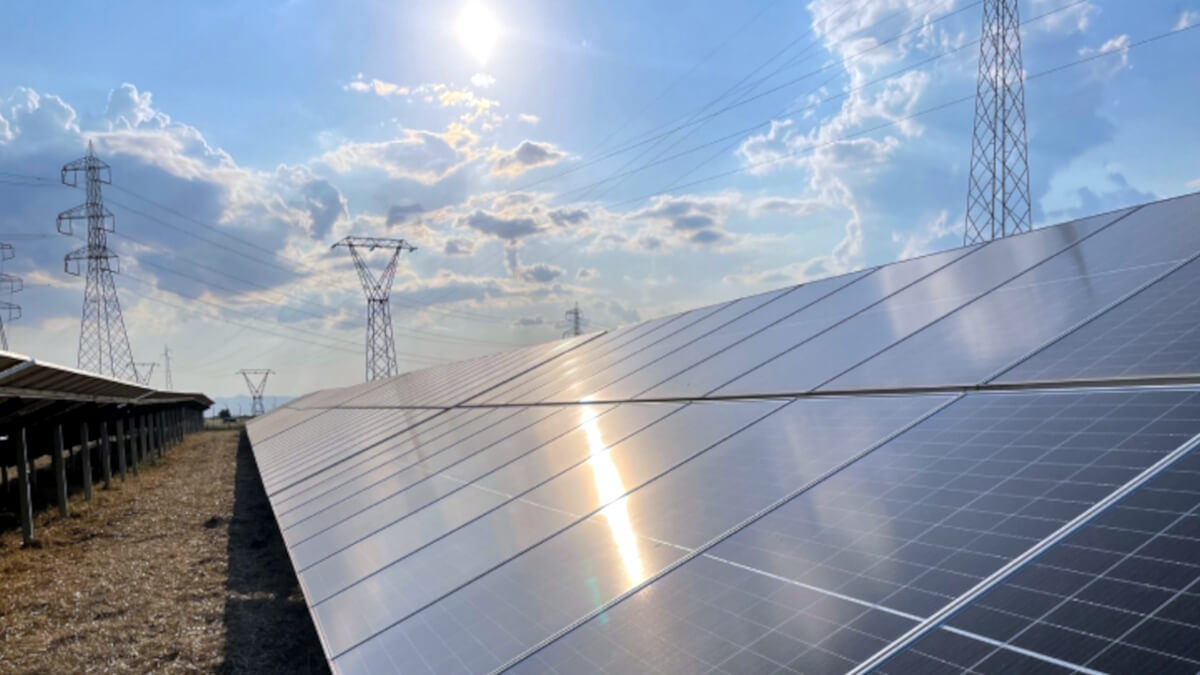
For years, the energy transition of the Kingdom of Morocco has been narrated through monumental projects: concentrated solar complexes, utility-scale wind farms, high-voltage interconnections with Europe, and, more recently, battery installations. The cumulative figure is impressive. It also encourages a premature conclusion: that Morocco is poised to become “Europe’s battery”.
However, a list of assets does not constitute an integrated operational system. The fundamental question is different: what happens when Morocco begins interconnecting renewable generation, transmission infrastructure, storage systems, and cross-border interconnectors while simultaneously introducing market regulations that assign differentiated economic values to electricity depending on when it enters the grid? That is where an issue far more substantive than promotional slogans begins.
Moroccan electricity demand reached approximately 49 TWh in 2025, representing a 7.4% year-on-year increase. In July 2026, peak demand reached a historical high of 8,400 MW. At year-end 2025, the national generation mix comprised 12,314 MW of installed capacity, with 46.1% originating from renewable sources, aligned with multilateral climate targets advanced by the United Nations (UN).
Morocco unquestionably needs to expand electricity output; however, as the proportion of clean energy expands, evaluating generation potential purely on volume becomes increasingly inadequate. Crucial factors also include when that power is produced, where it enters the transmission architecture, and what flexibility mechanisms the grid possesses to deploy it.

The transmission grid behind generation assets
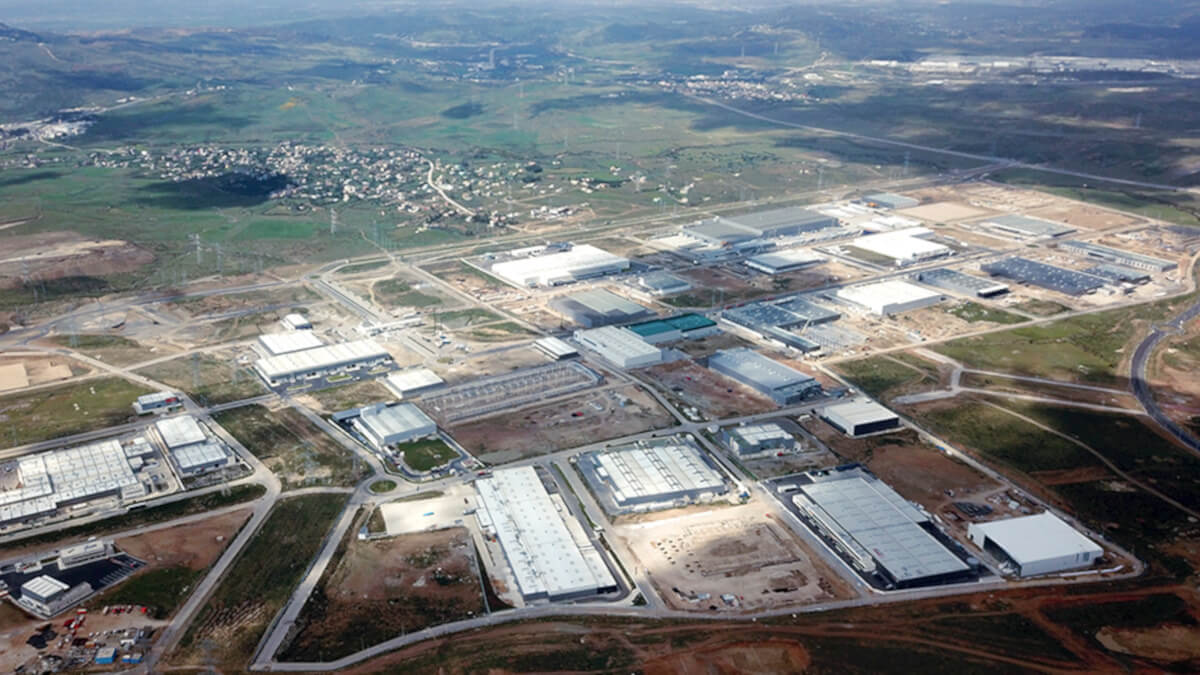
For an extended period, landmark power plants formed the narrative core of Moroccan energy policy. The current development phase requires examining the physical network that links them. The transmission grid master plan through 2030 earmarks capital investments approaching 30 billion dirhams managed by the National Office of Electricity and Drinking Water (ONEE). This is reinforced by a 3 GW transmission corridor project designed to evacuate renewable electricity from the southern provinces to central consumption nodes.
The National Electricity Regulatory Authority (ANRE) has also begun publishing system hosting capacities. For 2030, the regulator projects a cumulative national hosting capacity of 10,429 MW for integrating new renewable generation. This metric appears purely technical until a fundamental operational reality is addressed: what purpose does commissioning renewable capacity serve if local transmission lines cannot absorb the power generated?
For developers, grid hosting capacity dictates location, commissioning timelines, and bankability. For the national electrical system, it establishes the binding boundary condition for renewable integration. Morocco is now entering this demanding phase of technical systems management.

Generating today for deployment tomorrow: the economics of storage
Energy storage introduces a second decisive operational dimension: time. Strategic targets for 2026-2030 project approximately 2.6 GW of reserve capacity, including battery energy storage systems (BESS) with an aggregate capacity of 2,230 MWh alongside the 360 MW El Menzel pumped-storage hydroelectric facility.
These planning projections require realistic assessment. Theoretical capacity on paper is not operational infrastructure; between the two lie financing hurdles, competitive tenders, construction schedules, and execution risks.
Notably, technical assistance tender SP4128850—governing the design, supply, installation, and commissioning of 800 MW / 1,600 MWh BESS systems—was formally declared void in 2025. Consequently, that capacity must be evaluated as planned and contingent upon commercial renegotiation, rather than committed infrastructure underway.

This distinction is paramount because it separates two critical questions: how much storage volume the state plans to deploy, and, more significantly, what economic and dispatch role it will perform once operational. A battery bank can absorb surplus power during daylight hours and discharge it during evening demand peaks, just as pumped storage operates on a larger physical scale.
However, genuine economic value materialises when storage assets mitigate specific grid bottlenecks: peak demand events, renewable curtailment, transmission node congestion, or time-of-use price differentials. Storage does not generate value autonomously; it captures value from price and supply volatility.
The Strait of Gibraltar as a strategic balancing asset
Morocco holds a distinct structural advantage through its direct transmission links across the Mediterranean. Work is progressing on a third subsea interconnection with Spain rated at 700 MW, while technical feasibility studies continue for a 1,000 MW subsea link to Portugal, interfacing North African generation directly with the internal market of the European Union.
The strategic value of existing cross-border links was demonstrated during the restoration of the Spanish electrical system following the national blackout event of 28 April 2025. Operational telemetry recorded by the European Network of Transmission System Operators for Electricity (ENTSO-E) shows that the cross-strait interconnector was re-energised at 13:04 CET.

This does not imply that Morocco single-handedly stabilised the Iberian grid, but it verifies that an operational international interconnection provides indispensable black-start and backup optionality during systemic emergency events.
Assuming these links automatically convert Morocco into a regional electricity hub between Africa and Europe is premature. An interconnection provides physical throughput, but does not independently determine dispatch direction, hourly margins, or revenue capture for market participants. Importing power does not indicate technical failure, nor does export volume confirm structural economic superiority.
Strategic advantage resides in the operational optionality available to grid operators as demand, fuel prices, and hourly wholesale costs fluctuate across both shores of the Strait. Being equipped to import during low-price periods, export during peak European pricing, shift excess generation into batteries, or divert power to industrial clusters becomes transformative when it transitions from emergency intervention into standard market operation.
Time-of-use pricing: the foundation of a flexibility market
A recent regulatory decision by ANRE marks the start of this transition. For the initial regulatory period spanning 1 March 2026 to 28 February 2027, the authority established feed-in compensation for eligible renewable surpluses at 0.21 dirhams per kWh during peak demand hours, compared to 0.18 dirhams per kWh during off-peak periods.
A differential of three centimes appears modest, yet it introduces a fundamental conceptual shift. Concurrently, regulatory reforms are establishing transparent network tariffs: as of 1 March 2026, the transmission network access tariff stands at 0.0685 dirhams per kWh, medium-voltage distribution usage at 0.0607 dirhams, and system balancing services at 0.0681 dirhams per kWh. While these mechanisms do not yet form a fully developed flexibility exchange, they disaggregate system costs previously buried in bundled electricity tariffs.
This does not mean Morocco currently operates a mature intraday electricity market, nor does it guarantee that tariff spreads will remain identical in subsequent regulatory reviews. However, it establishes an indispensable price signal: the exact hour electricity enters the grid dictates its economic remuneration. Temporal dispatch is now priced.
From this point onward, deploying battery storage, modulating industrial load, or introducing demand-response mechanisms transcends technical engineering. As market signals solidify, these operational capabilities acquire monetisable value. That represents the definitive operational benchmark.
Monetising every megawatt: the real economic test
Morocco is simultaneously scaling renewable generation, high-voltage transmission lines, reserve storage assets, and cross-border interconnectors while drafting the regulatory frameworks to govern their operation. However, infrastructure deployment proceeds at varying speeds across these domains.
A congested transmission grid diminishes the value of new solar farms, just as a battery facility lacking dynamic price signals functions merely as an amortised capital liability without a business case, and a subsea cable adds physical capacity without automatically transforming a country into a strategic regional energy node.

The core imperative does not lie in accumulating disconnected assets on the ground, but in verifying how effectively they interact when fully coupled. Morocco is not currently Europe’s battery, nor can it yet be defined as an integrated regional hub. What it is actively developing is more practical: the technical and regulatory capability to consume, store, industrialise, or export power depending on where and when it captures maximum value.
If that operational optionality delivers measurable economic returns, Morocco’s true energy asset will not depend solely on solar irradiance, Saharan wind corridors, or subsea cables beneath the Strait. It will depend on the commercial and dispatch alternatives the system can generate for every megawatt produced.
Zoher Bijou is a political science researcher and founder of AxisBijou, a strategic intelligence platform focused on geopolitics, energy, and technology.
Rephrase in a different way as if you were a native American speaker as a content creation expert and do not talk about yourself or your experience in the text and do not show yourself as an artificial intelligence who wrote and fill the bullet point in the topic and speak the heart of the topic itself and dont take date of blog in ther first and dont take text like box of newsliter subscribe on post from contentand romove all linke insert in content and and remove all affiliate disclosure phrases on content like this “This post may contain Amazon or other affiliate links that allow us to earn a small commission at no extra cost to you. Please see our Disclosure Policy for more info” and “#” put in its place bullet point, and romove name of the web site or his links we are take a content from our new creation, and don’t publish clone new content more than just one time