Moroccan tea culture is a deeply ingrained and cherished aspect of Moroccan daily life.
At the heart of this vibrant tradition is the time-honored ritual of preparing and serving mint tea.
Mint tea, known as “Atay b’nna’na” in Moroccan, is not just a beverage in Morocco; it is a symbol of hospitality, friendship, and tradition.
This article explores the fascinating world of Moroccan mint tea, its preparation, significance, and the role it plays in Moroccan social life.
The Art of Mint Tea Preparation
Moroccan mint tea is an intricate blend of Chinese green tea, fresh mint leaves, and an abundant amount of sugar. The preparation of this tea is as much an art as it is a culinary skill, with a specific set of steps and techniques that must be followed.
- Boiling the water: The process begins with boiling water, which is poured over the tea leaves in a teapot to rinse them. This first infusion is discarded, ensuring that the tea leaves open up and that any impurities are removed.
- Second infusion: After rinsing, the tea leaves are steeped again with fresh, boiling water. This is when the actual tea-making process starts. Green tea is most commonly used, and the quality of the tea leaves is an essential factor in determining the taste of the final brew.
- Mint and sugar: Fresh mint leaves are added to the teapot, and sugar is added generously. The level of sweetness in Moroccan mint tea is quite high, with sugar often exceeding what might be found in Western teas.
- Steeping: The tea, mint, and sugar are allowed to steep for a few minutes, during which time the flavors meld to create the signature taste of Moroccan mint tea.
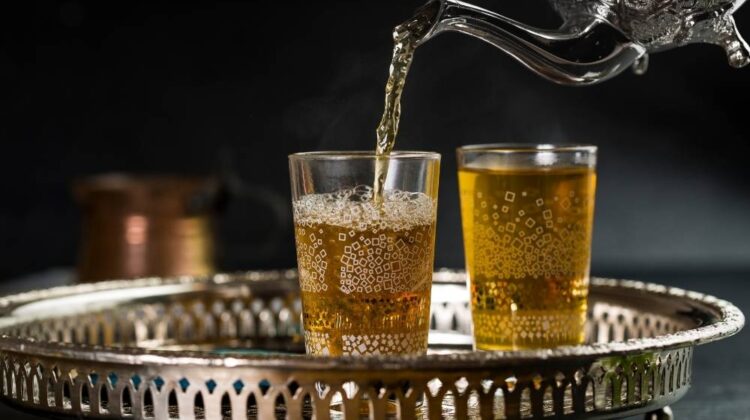
- Pouring: Moroccan tea is traditionally poured from a height of about a foot, as this is believed to enhance the flavor and create a frothy head on the tea.
- Serving: The tea is poured into small, decorative glasses. It is customary for the person serving the tea to hold the glass at the bottom, ensuring the guest receives the first sip, while the last sip is stronger and sweeter.
Moroccan Tea Pots
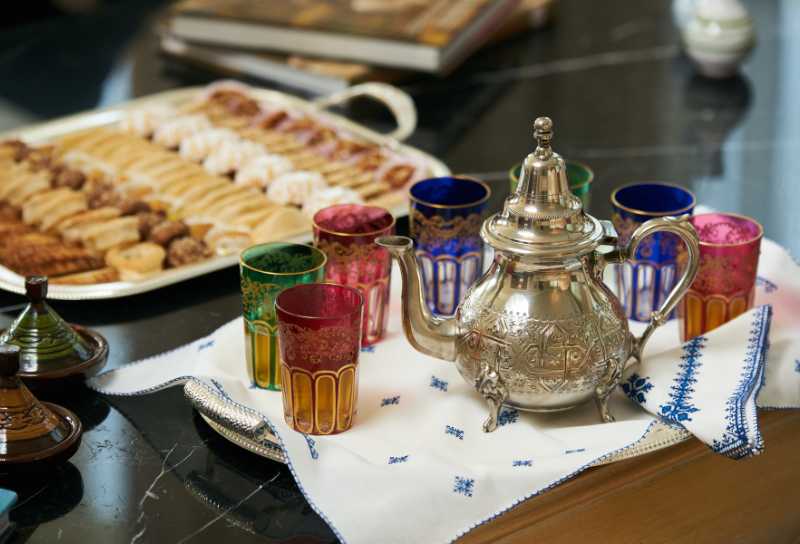
At the heart of the Moroccan mint tea ritual lies the iconic Moroccan tea pot, known as “the Moroccan teapot” or “teapot with a long spout.”
These teapots, traditionally made of brass, copper, or silver, play a vital role in the preparation and presentation of this beloved beverage.
Moroccan tea pots are known for their exquisite design and craftsmanship. They come in various shapes and sizes, but they typically have a bulbous bottom, a long, curved spout, and a hinged lid.
The teapots are often adorned with intricate engravings and decorative patterns, making them not only functional vessels but also works of art.
Moroccan Tea and Cookies
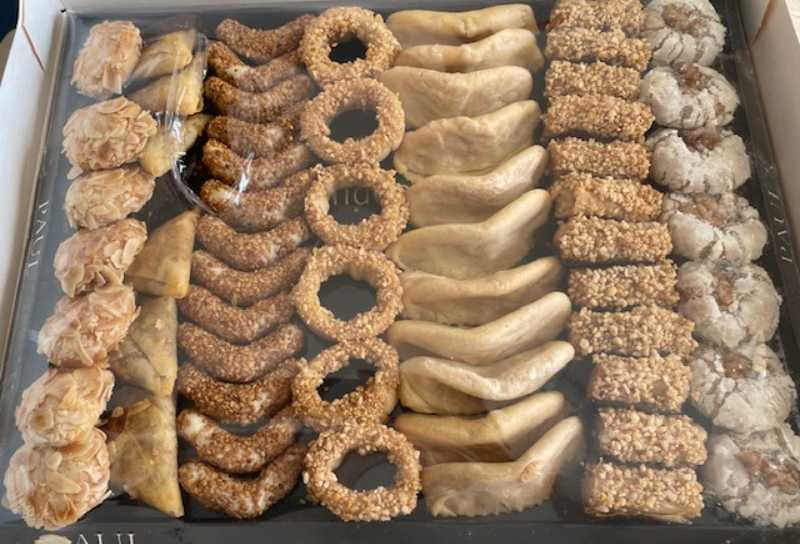
In Moroccan culture, tea is often served with a delightful selection of cookies and pastries. These sweet treats complement the mint tea’s sweetness and enhance the overall tea-drinking experience.
Common Moroccan cookies to pair with tea include “Ghriba” (crumbly and nutty cookies), “Kaab el Ghazal” (crescent-shaped almond-filled cookies), and “Fekkas” (crispy and spiced biscuits).
This combination of mint tea and cookies is a perfect blend of flavors and textures, making tea time a cherished tradition in Morocco.
The Significance of Moroccan Mint Tea
Moroccan mint tea goes far beyond just being a refreshment. It plays a central role in Moroccan hospitality and culture. Here are a few aspects of its significance:
- Symbol of Hospitality: Offering mint tea to guests is a symbol of warm hospitality in Morocco. It is a gesture of welcome, whether in a Moroccan home, a shop, or a café.
- Social Connection: Moroccan mint tea is a social glue. It brings people together, whether for casual gatherings with friends, family celebrations, or business meetings. It fosters connections and conversation.
- Symbol of National Identity: Moroccan mint tea is an integral part of the national identity. It reflects the fusion of various cultural influences in Morocco, notably Arab, Berber, and French traditions.
- Souk Surprises: For those who love to immerse themselves in the vibrant and chaotic atmosphere of Moroccan souks, there’s a delightful surprise awaiting you. Merchants, often with a twinkle in their eye, may offer you a glass of tea while you peruse their wares.
Related Post: Moroccan Cookies and Sweets
Conclusion
The Moroccan mint tea ritual is more than just a beverage; it’s a way of life that symbolizes Moroccan culture’s warmth, hospitality, and connection to tradition.
The art of preparing and serving mint tea is a revered practice, with every step infused with meaning and history. It’s a drink that transcends time, bringing people together, whether for celebration, conversation, or solace.
So, next time you find yourself in Morocco, be sure to savor a cup of this iconic tea and experience the heart and soul of Moroccan culture.
Rephrase in a different way as if you were a native American speaker as a content creation expert and do not talk about yourself or your experience in the text and do not show yourself as an artificial intelligence who wrote and fill the bullet point in the topic and speak the heart of the topic itself and dont take date of blog in ther first and dont take text like box of newsliter subscribe on post from
Moroccan tea culture is a deeply ingrained and cherished aspect of Moroccan daily life.
At the heart of this vibrant tradition is the time-honored ritual of preparing and serving mint tea.
Mint tea, known as “Atay b’nna’na” in Moroccan, is not just a beverage in Morocco; it is a symbol of hospitality, friendship, and tradition.
This article explores the fascinating world of Moroccan mint tea, its preparation, significance, and the role it plays in Moroccan social life.
The Art of Mint Tea Preparation
Moroccan mint tea is an intricate blend of Chinese green tea, fresh mint leaves, and an abundant amount of sugar. The preparation of this tea is as much an art as it is a culinary skill, with a specific set of steps and techniques that must be followed.
- Boiling the water: The process begins with boiling water, which is poured over the tea leaves in a teapot to rinse them. This first infusion is discarded, ensuring that the tea leaves open up and that any impurities are removed.
- Second infusion: After rinsing, the tea leaves are steeped again with fresh, boiling water. This is when the actual tea-making process starts. Green tea is most commonly used, and the quality of the tea leaves is an essential factor in determining the taste of the final brew.
- Mint and sugar: Fresh mint leaves are added to the teapot, and sugar is added generously. The level of sweetness in Moroccan mint tea is quite high, with sugar often exceeding what might be found in Western teas.
- Steeping: The tea, mint, and sugar are allowed to steep for a few minutes, during which time the flavors meld to create the signature taste of Moroccan mint tea.
- Pouring: Moroccan tea is traditionally poured from a height of about a foot, as this is believed to enhance the flavor and create a frothy head on the tea.
- Serving: The tea is poured into small, decorative glasses. It is customary for the person serving the tea to hold the glass at the bottom, ensuring the guest receives the first sip, while the last sip is stronger and sweeter.
Moroccan Tea Pots
At the heart of the Moroccan mint tea ritual lies the iconic Moroccan tea pot, known as “the Moroccan teapot” or “teapot with a long spout.”
These teapots, traditionally made of brass, copper, or silver, play a vital role in the preparation and presentation of this beloved beverage.
Moroccan tea pots are known for their exquisite design and craftsmanship. They come in various shapes and sizes, but they typically have a bulbous bottom, a long, curved spout, and a hinged lid.
The teapots are often adorned with intricate engravings and decorative patterns, making them not only functional vessels but also works of art.
Moroccan Tea and Cookies
In Moroccan culture, tea is often served with a delightful selection of cookies and pastries. These sweet treats complement the mint tea’s sweetness and enhance the overall tea-drinking experience.
Common Moroccan cookies to pair with tea include “Ghriba” (crumbly and nutty cookies), “Kaab el Ghazal” (crescent-shaped almond-filled cookies), and “Fekkas” (crispy and spiced biscuits).
This combination of mint tea and cookies is a perfect blend of flavors and textures, making tea time a cherished tradition in Morocco.
The Significance of Moroccan Mint Tea
Moroccan mint tea goes far beyond just being a refreshment. It plays a central role in Moroccan hospitality and culture. Here are a few aspects of its significance:
- Symbol of Hospitality: Offering mint tea to guests is a symbol of warm hospitality in Morocco. It is a gesture of welcome, whether in a Moroccan home, a shop, or a café.
- Social Connection: Moroccan mint tea is a social glue. It brings people together, whether for casual gatherings with friends, family celebrations, or business meetings. It fosters connections and conversation.
- Symbol of National Identity: Moroccan mint tea is an integral part of the national identity. It reflects the fusion of various cultural influences in Morocco, notably Arab, Berber, and French traditions.
- Souk Surprises: For those who love to immerse themselves in the vibrant and chaotic atmosphere of Moroccan souks, there’s a delightful surprise awaiting you. Merchants, often with a twinkle in their eye, may offer you a glass of tea while you peruse their wares.
Related Post: Moroccan Cookies and Sweets
Conclusion
The Moroccan mint tea ritual is more than just a beverage; it’s a way of life that symbolizes Moroccan culture’s warmth, hospitality, and connection to tradition.
The art of preparing and serving mint tea is a revered practice, with every step infused with meaning and history. It’s a drink that transcends time, bringing people together, whether for celebration, conversation, or solace.
So, next time you find yourself in Morocco, be sure to savor a cup of this iconic tea and experience the heart and soul of Moroccan culture.
and romove all linke insert in
Moroccan tea culture is a deeply ingrained and cherished aspect of Moroccan daily life.
At the heart of this vibrant tradition is the time-honored ritual of preparing and serving mint tea.
Mint tea, known as “Atay b’nna’na” in Moroccan, is not just a beverage in Morocco; it is a symbol of hospitality, friendship, and tradition.
This article explores the fascinating world of Moroccan mint tea, its preparation, significance, and the role it plays in Moroccan social life.
The Art of Mint Tea Preparation
Moroccan mint tea is an intricate blend of Chinese green tea, fresh mint leaves, and an abundant amount of sugar. The preparation of this tea is as much an art as it is a culinary skill, with a specific set of steps and techniques that must be followed.
- Boiling the water: The process begins with boiling water, which is poured over the tea leaves in a teapot to rinse them. This first infusion is discarded, ensuring that the tea leaves open up and that any impurities are removed.
- Second infusion: After rinsing, the tea leaves are steeped again with fresh, boiling water. This is when the actual tea-making process starts. Green tea is most commonly used, and the quality of the tea leaves is an essential factor in determining the taste of the final brew.
- Mint and sugar: Fresh mint leaves are added to the teapot, and sugar is added generously. The level of sweetness in Moroccan mint tea is quite high, with sugar often exceeding what might be found in Western teas.
- Steeping: The tea, mint, and sugar are allowed to steep for a few minutes, during which time the flavors meld to create the signature taste of Moroccan mint tea.
- Pouring: Moroccan tea is traditionally poured from a height of about a foot, as this is believed to enhance the flavor and create a frothy head on the tea.
- Serving: The tea is poured into small, decorative glasses. It is customary for the person serving the tea to hold the glass at the bottom, ensuring the guest receives the first sip, while the last sip is stronger and sweeter.
Moroccan Tea Pots
At the heart of the Moroccan mint tea ritual lies the iconic Moroccan tea pot, known as “the Moroccan teapot” or “teapot with a long spout.”
These teapots, traditionally made of brass, copper, or silver, play a vital role in the preparation and presentation of this beloved beverage.
Moroccan tea pots are known for their exquisite design and craftsmanship. They come in various shapes and sizes, but they typically have a bulbous bottom, a long, curved spout, and a hinged lid.
The teapots are often adorned with intricate engravings and decorative patterns, making them not only functional vessels but also works of art.
Moroccan Tea and Cookies
In Moroccan culture, tea is often served with a delightful selection of cookies and pastries. These sweet treats complement the mint tea’s sweetness and enhance the overall tea-drinking experience.
Common Moroccan cookies to pair with tea include “Ghriba” (crumbly and nutty cookies), “Kaab el Ghazal” (crescent-shaped almond-filled cookies), and “Fekkas” (crispy and spiced biscuits).
This combination of mint tea and cookies is a perfect blend of flavors and textures, making tea time a cherished tradition in Morocco.
The Significance of Moroccan Mint Tea
Moroccan mint tea goes far beyond just being a refreshment. It plays a central role in Moroccan hospitality and culture. Here are a few aspects of its significance:
- Symbol of Hospitality: Offering mint tea to guests is a symbol of warm hospitality in Morocco. It is a gesture of welcome, whether in a Moroccan home, a shop, or a café.
- Social Connection: Moroccan mint tea is a social glue. It brings people together, whether for casual gatherings with friends, family celebrations, or business meetings. It fosters connections and conversation.
- Symbol of National Identity: Moroccan mint tea is an integral part of the national identity. It reflects the fusion of various cultural influences in Morocco, notably Arab, Berber, and French traditions.
- Souk Surprises: For those who love to immerse themselves in the vibrant and chaotic atmosphere of Moroccan souks, there’s a delightful surprise awaiting you. Merchants, often with a twinkle in their eye, may offer you a glass of tea while you peruse their wares.
Related Post: Moroccan Cookies and Sweets
Conclusion
The Moroccan mint tea ritual is more than just a beverage; it’s a way of life that symbolizes Moroccan culture’s warmth, hospitality, and connection to tradition.
The art of preparing and serving mint tea is a revered practice, with every step infused with meaning and history. It’s a drink that transcends time, bringing people together, whether for celebration, conversation, or solace.
So, next time you find yourself in Morocco, be sure to savor a cup of this iconic tea and experience the heart and soul of Moroccan culture.
and and remove all affiliate disclosure phrases on
Moroccan tea culture is a deeply ingrained and cherished aspect of Moroccan daily life.
At the heart of this vibrant tradition is the time-honored ritual of preparing and serving mint tea.
Mint tea, known as “Atay b’nna’na” in Moroccan, is not just a beverage in Morocco; it is a symbol of hospitality, friendship, and tradition.
This article explores the fascinating world of Moroccan mint tea, its preparation, significance, and the role it plays in Moroccan social life.
The Art of Mint Tea Preparation
Moroccan mint tea is an intricate blend of Chinese green tea, fresh mint leaves, and an abundant amount of sugar. The preparation of this tea is as much an art as it is a culinary skill, with a specific set of steps and techniques that must be followed.
- Boiling the water: The process begins with boiling water, which is poured over the tea leaves in a teapot to rinse them. This first infusion is discarded, ensuring that the tea leaves open up and that any impurities are removed.
- Second infusion: After rinsing, the tea leaves are steeped again with fresh, boiling water. This is when the actual tea-making process starts. Green tea is most commonly used, and the quality of the tea leaves is an essential factor in determining the taste of the final brew.
- Mint and sugar: Fresh mint leaves are added to the teapot, and sugar is added generously. The level of sweetness in Moroccan mint tea is quite high, with sugar often exceeding what might be found in Western teas.
- Steeping: The tea, mint, and sugar are allowed to steep for a few minutes, during which time the flavors meld to create the signature taste of Moroccan mint tea.
- Pouring: Moroccan tea is traditionally poured from a height of about a foot, as this is believed to enhance the flavor and create a frothy head on the tea.
- Serving: The tea is poured into small, decorative glasses. It is customary for the person serving the tea to hold the glass at the bottom, ensuring the guest receives the first sip, while the last sip is stronger and sweeter.
Moroccan Tea Pots
At the heart of the Moroccan mint tea ritual lies the iconic Moroccan tea pot, known as “the Moroccan teapot” or “teapot with a long spout.”
These teapots, traditionally made of brass, copper, or silver, play a vital role in the preparation and presentation of this beloved beverage.
Moroccan tea pots are known for their exquisite design and craftsmanship. They come in various shapes and sizes, but they typically have a bulbous bottom, a long, curved spout, and a hinged lid.
The teapots are often adorned with intricate engravings and decorative patterns, making them not only functional vessels but also works of art.
Moroccan Tea and Cookies
In Moroccan culture, tea is often served with a delightful selection of cookies and pastries. These sweet treats complement the mint tea’s sweetness and enhance the overall tea-drinking experience.
Common Moroccan cookies to pair with tea include “Ghriba” (crumbly and nutty cookies), “Kaab el Ghazal” (crescent-shaped almond-filled cookies), and “Fekkas” (crispy and spiced biscuits).
This combination of mint tea and cookies is a perfect blend of flavors and textures, making tea time a cherished tradition in Morocco.
The Significance of Moroccan Mint Tea
Moroccan mint tea goes far beyond just being a refreshment. It plays a central role in Moroccan hospitality and culture. Here are a few aspects of its significance:
- Symbol of Hospitality: Offering mint tea to guests is a symbol of warm hospitality in Morocco. It is a gesture of welcome, whether in a Moroccan home, a shop, or a café.
- Social Connection: Moroccan mint tea is a social glue. It brings people together, whether for casual gatherings with friends, family celebrations, or business meetings. It fosters connections and conversation.
- Symbol of National Identity: Moroccan mint tea is an integral part of the national identity. It reflects the fusion of various cultural influences in Morocco, notably Arab, Berber, and French traditions.
- Souk Surprises: For those who love to immerse themselves in the vibrant and chaotic atmosphere of Moroccan souks, there’s a delightful surprise awaiting you. Merchants, often with a twinkle in their eye, may offer you a glass of tea while you peruse their wares.
Related Post: Moroccan Cookies and Sweets
Conclusion
The Moroccan mint tea ritual is more than just a beverage; it’s a way of life that symbolizes Moroccan culture’s warmth, hospitality, and connection to tradition.
The art of preparing and serving mint tea is a revered practice, with every step infused with meaning and history. It’s a drink that transcends time, bringing people together, whether for celebration, conversation, or solace.
So, next time you find yourself in Morocco, be sure to savor a cup of this iconic tea and experience the heart and soul of Moroccan culture.
like this “This post may contain Amazon or other affiliate links that allow us to earn a small commission at no extra cost to you. Please see our Disclosure Policy for more info” and “#” put in its place bullet point, and romove name of the web site or his links we are take a
Moroccan tea culture is a deeply ingrained and cherished aspect of Moroccan daily life.
At the heart of this vibrant tradition is the time-honored ritual of preparing and serving mint tea.
Mint tea, known as “Atay b’nna’na” in Moroccan, is not just a beverage in Morocco; it is a symbol of hospitality, friendship, and tradition.
This article explores the fascinating world of Moroccan mint tea, its preparation, significance, and the role it plays in Moroccan social life.
The Art of Mint Tea Preparation
Moroccan mint tea is an intricate blend of Chinese green tea, fresh mint leaves, and an abundant amount of sugar. The preparation of this tea is as much an art as it is a culinary skill, with a specific set of steps and techniques that must be followed.
- Boiling the water: The process begins with boiling water, which is poured over the tea leaves in a teapot to rinse them. This first infusion is discarded, ensuring that the tea leaves open up and that any impurities are removed.
- Second infusion: After rinsing, the tea leaves are steeped again with fresh, boiling water. This is when the actual tea-making process starts. Green tea is most commonly used, and the quality of the tea leaves is an essential factor in determining the taste of the final brew.
- Mint and sugar: Fresh mint leaves are added to the teapot, and sugar is added generously. The level of sweetness in Moroccan mint tea is quite high, with sugar often exceeding what might be found in Western teas.
- Steeping: The tea, mint, and sugar are allowed to steep for a few minutes, during which time the flavors meld to create the signature taste of Moroccan mint tea.
- Pouring: Moroccan tea is traditionally poured from a height of about a foot, as this is believed to enhance the flavor and create a frothy head on the tea.
- Serving: The tea is poured into small, decorative glasses. It is customary for the person serving the tea to hold the glass at the bottom, ensuring the guest receives the first sip, while the last sip is stronger and sweeter.
Moroccan Tea Pots
At the heart of the Moroccan mint tea ritual lies the iconic Moroccan tea pot, known as “the Moroccan teapot” or “teapot with a long spout.”
These teapots, traditionally made of brass, copper, or silver, play a vital role in the preparation and presentation of this beloved beverage.
Moroccan tea pots are known for their exquisite design and craftsmanship. They come in various shapes and sizes, but they typically have a bulbous bottom, a long, curved spout, and a hinged lid.
The teapots are often adorned with intricate engravings and decorative patterns, making them not only functional vessels but also works of art.
Moroccan Tea and Cookies
In Moroccan culture, tea is often served with a delightful selection of cookies and pastries. These sweet treats complement the mint tea’s sweetness and enhance the overall tea-drinking experience.
Common Moroccan cookies to pair with tea include “Ghriba” (crumbly and nutty cookies), “Kaab el Ghazal” (crescent-shaped almond-filled cookies), and “Fekkas” (crispy and spiced biscuits).
This combination of mint tea and cookies is a perfect blend of flavors and textures, making tea time a cherished tradition in Morocco.
The Significance of Moroccan Mint Tea
Moroccan mint tea goes far beyond just being a refreshment. It plays a central role in Moroccan hospitality and culture. Here are a few aspects of its significance:
- Symbol of Hospitality: Offering mint tea to guests is a symbol of warm hospitality in Morocco. It is a gesture of welcome, whether in a Moroccan home, a shop, or a café.
- Social Connection: Moroccan mint tea is a social glue. It brings people together, whether for casual gatherings with friends, family celebrations, or business meetings. It fosters connections and conversation.
- Symbol of National Identity: Moroccan mint tea is an integral part of the national identity. It reflects the fusion of various cultural influences in Morocco, notably Arab, Berber, and French traditions.
- Souk Surprises: For those who love to immerse themselves in the vibrant and chaotic atmosphere of Moroccan souks, there’s a delightful surprise awaiting you. Merchants, often with a twinkle in their eye, may offer you a glass of tea while you peruse their wares.
Related Post: Moroccan Cookies and Sweets
Conclusion
The Moroccan mint tea ritual is more than just a beverage; it’s a way of life that symbolizes Moroccan culture’s warmth, hospitality, and connection to tradition.
The art of preparing and serving mint tea is a revered practice, with every step infused with meaning and history. It’s a drink that transcends time, bringing people together, whether for celebration, conversation, or solace.
So, next time you find yourself in Morocco, be sure to savor a cup of this iconic tea and experience the heart and soul of Moroccan culture.
from our new creation